
Product categories
- Accessories
- Bundhosen
- Deerskin Lederhosen
- Dirndl
- Dirndl Purses
- Girls Dirndl
- Kids
- Kids Lederhosen
- Lederhosen Belts
- Lederhosen Men
- Lederhosen Sets
- Lederhosen Shoes
- Lederhosen Skirts
- Lederhosen Socks
- Lederhosen Suspenders
- Lederhosen Women
- Long Lederhosen
- Men's Oktoberfest Outfits
- Oktoberfest 2026 Sale
- Plus Size Dirndl
- Plus Size Lederhosen
- Trachten Jackets
- Trachten Shirts
- Trachten Vest
- Uncategorized
- Women's Oktoberfest Clothing
Filter by price
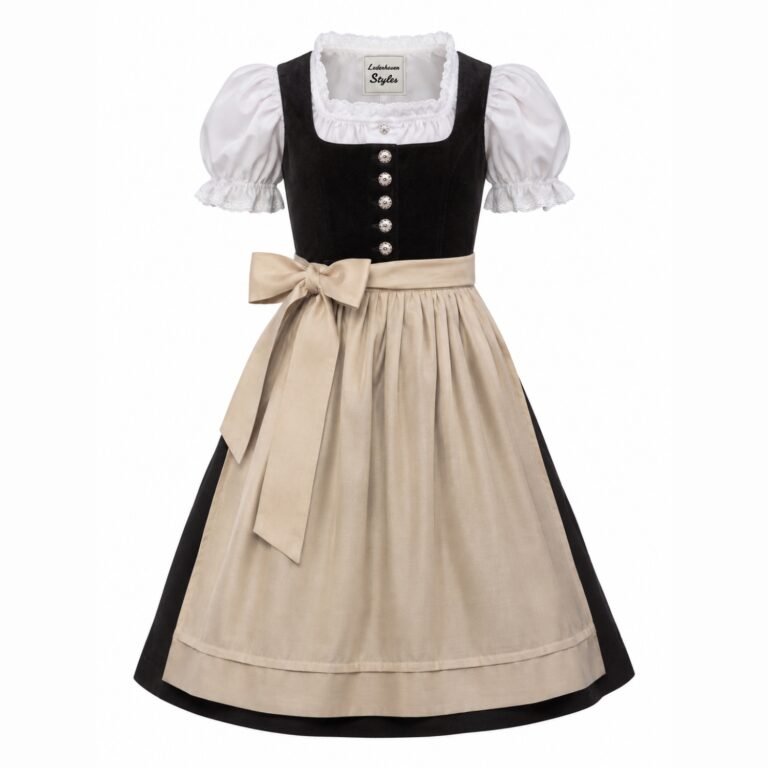
Girls’ Ebony Almond Velvet Dirndl
What Is a Girls Dirndl, and How Do You Choose the Right One?
A girls dirndl is the traditional Bavarian outfit re-cut for children’s bodies: a bodice joined to a skirt, a blouse and an apron, usually sold as a 3-piece set, sized by height in EU size steps that run from 62 to 158 cm, and worn for Oktoberfest and family events.
The cut follows a women’s dirndl closely, which is why shopping for one feels familiar to any mother who owns her own. What changes is proportion: a shorter torso, more room through the middle, and an outfit that arrives ready to wear instead of as separates you have to hunt down one by one.
For families with Bavarian heritage, that difference matters more than it sounds. The girls dirndl is usually the piece that gets photographed, handed down to a younger sister and pulled out again for the next big day, so it pays to buy one that still looks right after its third outing.
Sizing confuses more of our customers than style does, so here is the quick conversion we give anyone who asks what number to order. The EU number equals the child’s height in centimeters, and the age column is only an approximate age:
| EU size (height in cm) | Approximate age |
| 62–68 | 0–6 months |
| 74–80 | 9–12 months |
| 86–92 | 18 months–2 years |
| 98–104 | 3–4 years |
| 110–116 | 5–6 years |
| 122–128 | 7–8 years |
| 134–140 | 9–10 years |
| 146–158 | 11–13 years |
What Pieces Make Up a Girls Dirndl?
A girls dirndl is made of three parts that work as one outfit: the dress (bodice and skirt sewn together), a short blouse worn underneath, and an apron knotted over the front, with all three normally included in the set.
That simple formula hides real differences once you handle the pieces. The bodice decides the silhouette, while the apron construction, meaning how the gathers sit and how long the ties run, decides whether the traditional look survives a day of running around. Fabric weight is the quiet tell: a dress that feels flimsy in the hand tends to crease at the seams before lunch.
Age shifts the formula too. Babies and infants often wear a dirndl-print onesie instead of separates, because snaps beat ribbons at changing time. From toddlers up through school-age children, the complete three-piece outfit takes over, and the choice becomes which details suit your little one:
| Piece | What to check | Common choices |
| Dress | Bodice shape and the motifs in the fabric | Everyday daywear prints, or satin for formal days |
| Blouse | Neckline and sleeve trim | Simple edges, or lacy designs with fine lace |
| Apron | Gathering and how long the ties are, since it takes the most wear | Gingham aprons for play, bias cuts for a clean drape |
| Onesie-style dirndl | Snap closures and stretch | Baby sizes only, before school age sets begin |
When we compare samples side by side, the apron is nearly always the first piece to show strain, so we check its seams before anything else.
Why Is an Authentic Children’s Dirndl Worth It?
An authentic children’s dirndl is worth it because it is real clothing built on the same pattern logic as an adult dress, so it holds its shape, fastens correctly and survives repeat wearing, while a novelty party outfit usually does not.
Start with where the garment comes from. The dirndl began as practical workwear for rural peasants, and by the 18th century it was the everyday uniform of maids’ dresses. The nobles then borrowed it, adding luxurious fabrics such as silk. A child’s version that respects that lineage carries a real piece of German tradition; a costume-style copy carries only a printed suggestion of one.
Construction is where you actually see the gap. In a well-made dress, bodice, skirt and apron behave as a coordinated system: the front edges close properly, the apron and skirt lie flat, and nothing gapes when she sits down. That is what durable quality means on a child. A European-made piece is often a good sign, but cuts and sizes vary by brand, so read the product page for fabric and construction details.
Many German-American families buy dirndls to keep traditions going across generations, and a dress made properly can do exactly that. A cheap costume rarely survives long enough to make it to a younger cousin.
What Size Dirndl Does My Daughter Need?
Your daughter needs the dirndl size that matches her current height, confirmed by checking her bust measurements and waist measurements against the size guide for that exact dress.
Height gets you to the right row, and the body numbers confirm it. The sizes shown on one label do not always line up with another brand, and most of the exchange requests we handle trace back to inaccurate sizing on bargain listings rather than to parents choosing badly. Children move a lot, so aim for a fit that allows a full arm swing without the bodice riding up.
Fine-tuning happens at the front. A button-through bodice is fixed, so it has to be right straight off the rack, and adjustable straps on some styles help at the shoulder. A bodice that is laced gives you the most room to adjust:
- Pocket first: take the matching ribbon out of the dress pocket, where it is usually tucked away.
- Top hooks: thread the ribbon through the top hooks on both sides of the bodice.
- Crisscrossed lacing: work the ribbon downward in an X pattern to the waistline, snug but never tight.
- Tied apron: wrap the apron around her middle and finish it with a bow.
Where that bow sits carries meaning. Tradition reads the apron knot as a sign of status: tied on the right side for a romantic attachment, on the left side for unmarried. Most parents simply choose the spot that looks neatest, but it is worth knowing before she heads out.
How Should a Girl Wear and Style Her Dirndl?
A girl should wear her dirndl at a length that suits her day, in colors chosen for the setting, finished with cream knee-high socks.
Length is a practical decision before it is a style one. A midi reads as dressier and holds up in photos and at longer events, while shorter versions are kinder to active children who spend the afternoon walking, playing and climbing on benches. For girls under five, we lean short almost every time.
Color then follows the setting. The classic run of green, bordeaux, blue and pink, often in floral patterns, covers most daytime outings. Deep red and navy belong to the evening apron dresses that come out after dark. Newer collections push bright colors and bolder prints, and designs change yearly, so last season’s look is easy to spot.
The rest is restraint. Let one element carry the Bavarian charm, either the print or the trim, and keep everything around it quiet so the dress does the talking.
How Do You Wash and Care for a Girls Dirndl?
Care for a girls dirndl piece by piece: wash the cotton parts gently in cool water, spot clean marks on the dress with a damp cloth, and leave anything with ruffles or heavy trim to a professional cleaner.
Fiber content decides how forgiving a dirndl will be. Natural fibers such as cotton, linen and wool blends breathe and press well, while synthetic fabrics tend to pill and cling to stains. A typical cotton-led set might list a 100% cotton outer, a lining of 65% polyester/35% cotton and an apron in 55% linen/45% cotton.
Fiber content decides how forgiving a dirndl will be. Natural-fiber garments sold in Europe fall under EU textile safety standards such as REACH, and Oeko-Tex certification is worth looking for. Cheap imports made in Asia from pure polyester with unregulated dyes are, in our experience, the ones most likely to run in the rinse.
For busy families, small checks hide everyday marks far better than solid pastels, which is why we steer parents of very young girls toward them.
Where Can Girls Wear a Dirndl Besides Oktoberfest?
Girls can wear a dirndl well beyond Oktoberfest, at Kirchweih, family outings, family celebrations, Bavarian gatherings and themed costume parties.
Oktoberfest itself started in 1810 as a public party for the marriage of the future King Ludwig I, and the Bavarian dress became the natural occasion outfit for anyone who wanted to celebrate properly. The real tracht worn across Bavaria and Austria was never limited to one week in autumn, though; it turns up at church fairs, harvest days and plenty of other events.
What has changed is who wears it. The younger generation has revived the look with more enthusiasm than previous generations, and retailers reported a 750% increase in sales since 2002.
For many of our customers, a dirndl at celebrations is a simple way to claim that heritage out loud, and a daughter in a matching outfit is usually the part the grandparents talk about afterward.
Where Did the Dirndl Come From, and Why Do Kids Still Wear It?
The dirndl came from the working wardrobe of rural Bavaria and Austria, and kids still wear it because it remains living cultural identity rather than a museum piece.
It is easy to treat the dirndl as an Oktoberfest prop, and the scale of that festival encourages it: Munich hosts the largest version, drawing 6.2 million guests, and the party is now celebrated worldwide. Tracht runs broader than one city, though. Distinct regions, from Bavaria to East Frisia and North Germany, keep their own dress, food and folk festivals, and the dirndl sits inside that wider culture.
Kids dirndls follow the same design principles as the dresses women wear, just cut youthful and girlish, with smaller prints and lighter trims. A genuine piece made with traditional methods in Germany or Austria is a different thing from the costumes sold in party aisles, and we notice children tug at it far less over long festival days.
Modern fashion has loosened the rules: older girls wear the blouse off the shoulder and add contemporary accessories without anyone blinking. What has not changed is the feeling behind it, a mix of pride, joy and a little beauty she gets to wear on purpose.
From What Age Can a Girl Wear a Dirndl?
A girl can wear a dirndl from her first months, since sizing starts at EU 62 for newborns and runs all the way up to the early teens.
Her first dirndl is often a 2T or 3T, the typical dirndl for toddler girls heading to their first fest, while older children move into numbered sizes up to 164. Labels use European standards, which line up only loosely with standard children’s sizing in the US, so our expert recommendations always begin with height. Like any traditional children’s clothing, size for the girl standing in front of you.
Girls Dirndl FAQs
Which Measurements Decide a Girls Dirndl Size?
Height decides a girls dirndl size first, and chest and waist confirm it.
Measure her standing straight, compare the numbers with the chart for the dress you want, and size up when she falls between sizes, since adjustable lacing can pull a larger bodice in but cannot let a small one out. Going one size larger is the recommended move for fast growers. The same logic applies to shoe size: half a size to a full size larger keeps long days easier on her feet.
What Does a Girl Wear Under Her Dirndl?
A girl wears a matching blouse under her dirndl, with white socks or tights on her legs and, ideally, a pair of bloomers.
Keep the legwear plain when the dress is detailed, so the print stays the focus. Bloomers sit shorter than the skirt and are allowed to peek out, which looks playful and takes the worry out of playground slides.
Which Shoes Work Best With a Girls Dirndl?
The best shoes for a girls dirndl are flat shoes with flexible soles, such as ballerinas or small haferl shoes in brown or black.
Children stand and run for hours at a fest, so skip pinching soles and wobbly heels, however cute they look in the box. Proper trachten shoes are built for all-day wear, and a comfortable pair matters more than a perfect color match. When you shop shoes with dirndl outfits in mind, have her try them on with the socks she will actually wear.
Can You Put a Kids Dirndl in the Washing Machine?
Some parts of a kids dirndl can go in the washing machine: blouses and bloomers are usually machine washable on a gentle, cold cycle, but the dress itself usually is not.
Anything delicate, with heavy trim or ruffles, should be dry cleaned. Aprons may be washable too, yet the care label always has the final word. When in doubt, hand wash; cotton daywear styles are simply easier to care for than satin ones.
Can a Girls Dirndl Be Worn Outside Festival Season?
Yes, a girls dirndl works all year, well beyond the autumn festival calendar.
Families choose one for a birthday, Christmas and Advent markets, a first Communion or Confirmation, and the local German Fest. At a wedding or bridal shower, flower girls in lavender or rose dirndls tie a Bavarian theme together without any extra decorating.
Is a Girls Dirndl Comfortable Enough for a Full Day?
A well-made girls dirndl is comfortable for a full day when it is cut from breathable, soft materials that let her dance and run without feeling restricted.
Premium materials pay off on long festival days, when comfort decides whether she keeps the outfit on past lunch. Good quality and real authenticity also give you a dress she can cherish for years, or pass to a cousin.
What Is the Difference Between a Girls Dirndl and Kids Lederhosen?
A girls dirndl is a dress-style outfit, traditionally for girls, while kids lederhosen are leather shorts worn by boys and girls alike.
Lederhosen are effectively unisex, with adjustable features such as suspenders that grow with the child, whereas a dirndl adjusts through its lacing and apron ties. Leather gets wiped rather than washed. Many families pair both: lederhosen for the brother from our Kids Lederhosen collection, and a soft cotton dirndl for his sister, ready for any weather with a cardigan on top.