
Product categories
- Accessories
- Bundhosen
- Deerskin Lederhosen
- Dirndl
- Dirndl Purses
- Girls Dirndl
- Kids
- Kids Lederhosen
- Lederhosen
- Lederhosen Belts
- Lederhosen Men
- Lederhosen Sets
- Lederhosen Shoes
- Lederhosen Skirts
- Lederhosen Socks
- Lederhosen Suspenders
- Lederhosen Women
- Long Lederhosen
- Men
- Oktoberfest 2026 Sale
- Plus Size Dirndl
- Plus Size Lederhosen
- Trachten Jackets
- Trachten Shirts
- Trachten Vest
- Uncategorized
- Women
Filter by price
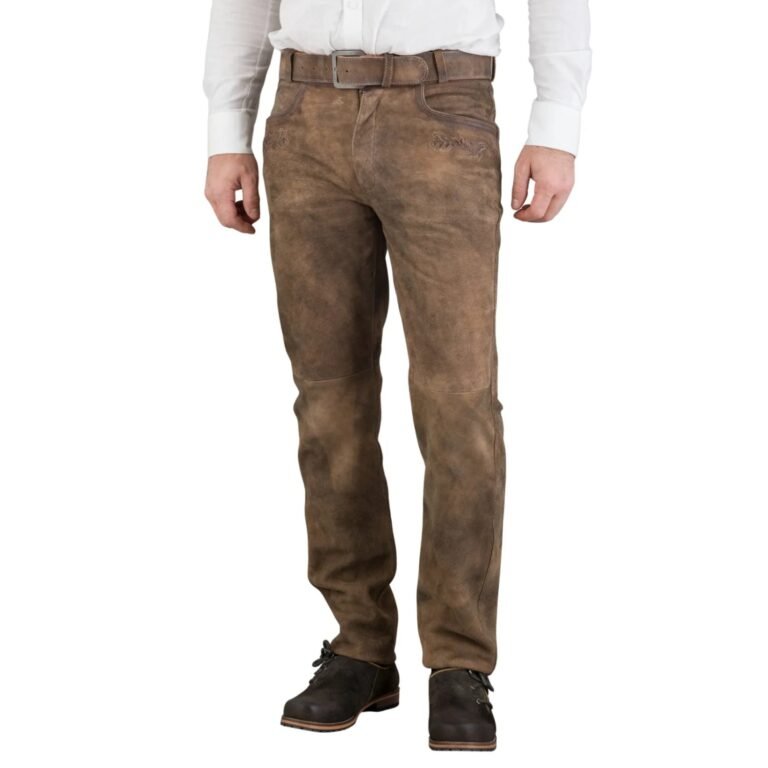
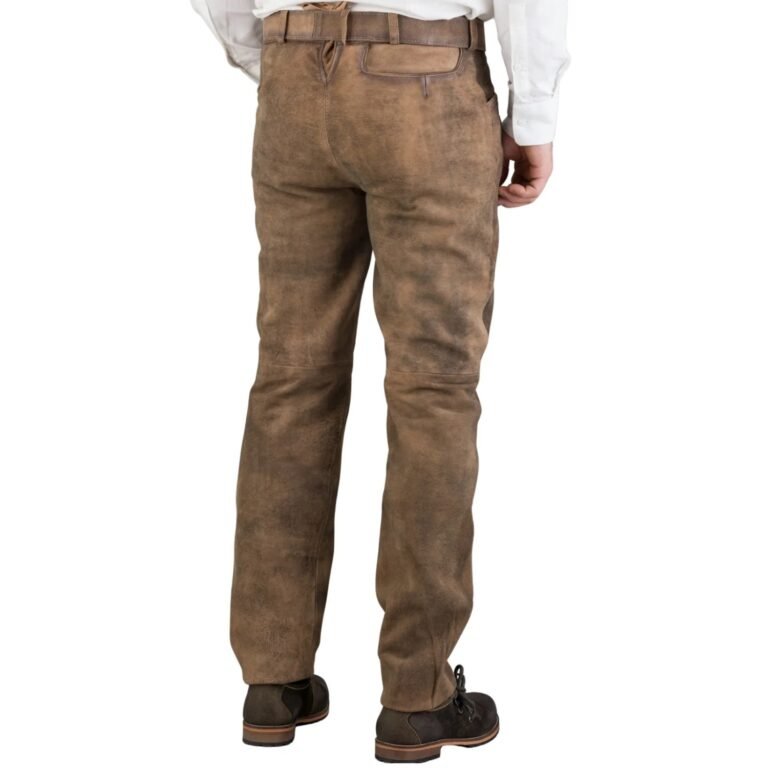
Antique Brown Long Lederhosen
What Are Long Lederhosen and Who Are They For?
Long lederhosen are leather trousers that run down to the ankle bone, cut with a straight leg and held on a leather belt instead of suspenders, and they suit men who want the dressiest, cold-weather version of Alpine dress.
Most people know lederhosen from Oktoberfest photos of short pairs, or from the knee-length Bundhosen a grandfather kept in the closet, so a full-length pair tends to get a second look. That reaction makes sense once you know the origins: 18th-century Tyrolean workwear made for hunters, foresters and even nobles who spent long days in the mountains of Tyrol and Bavaria.
Hide matters more on this cut than on any other, because there is simply more of it on show. Goatskin stays light over a long leg, deerskin handles damp autumn air, cow suede gives first-time buyers a sturdy, lower-priced start, and calfskin copes with hard daily wear.
From the fittings we do, long-pair buyers tend to fall into two groups: the groom planning a ceremony in Bavaria, and the regular who already owns shorts and wants something for Kirchweih or a cold night out, finished with a long-sleeved shirt, a waistcoat and Haferl shoes. This page is a practical guide to that decision, covering length, leather, fit, cost, styling mistakes and care.
Should You Choose Long Lederhosen, Bundhosen or Short Lederhosen?
Choose long lederhosen when the event is dressy or the air is cold, knee-breeches when you want one pair for most of the year, and shorts for hot summer days.
Of the three lederhosen lengths, the long pair is the most formal and the least common, and it is rarer in festival tents than either shorter cut. Most attendees at big festivals still choose shorts, which keeps the full-length pair uncommon and noticeable. It finishes at the ankle, hangs from a belt, and simply uses more fabric.
That extra hide is the whole argument. Leg coverage brings warmth, while short lederhosen typically ride on braces and leave the knee bare for a summer festival. The table sets the three side by side.
| Length | Where the hem sits | Held up by | Where it works best |
| Long | At the ankle, straight leg | Belt | Almabtrieb, evening events, cooler weather, traditional folk festivals |
| Knee-breeches | Just under the knee, closed with a strap | Braces | Walks, travel, three-season wear |
| Short | Mid-thigh to just above the knee | Braces | Hot-weather festivals |
A quick test I use with customers: if you would wear a jacket to the event, the long cut belongs there too. At an Almabtrieb, participants and spectators both dress for a cold morning, and at a Trachtenumzug the full-length pair looks right at home. For tradition-minded wearers in older age groups, the long cut often carries more meaning than shorts.
None of this makes the lengths rivals. In a year-round Trachten wardrobe, long and short pairs are traditional counterparts: one for July, one for October. If you want one pair for the seasons in between, the Bundhosen range covers that middle ground.
When Are Long Lederhosen the Right Choice?
Long lederhosen are the right choice for formal Bavarian events, cold-season festivals and any outing that runs late into a chilly night.
The clearest case is a Bavarian wedding. A formal Trachten event calls for formal elegance, and a full-length pair with a dark vest delivers it without tipping into costume. Beyond weddings, the same logic covers other ceremonial occasions and traditional events, from church festivals to a club anniversary.
That formality has a history. In the 19th century, the Trachtenvereine, Bavarian cultural societies set up to preserve local dress, formalized the long cut as the top tier of the costume, and that status still decides the occasion most men save it for.
Weather is the second trigger. Cattle-drive festivals in the Alps fall at the end of September, winter markets are colder still, and most autumn events reward covered legs. At the Munich festival the long pair is less common, yet it suits cooler evenings and the ceremonial entry of the tent landlords on opening day.
There is also a quieter reason. In a tent full of short-lederhosen wearers, a long pair is the simplest way to stand out without shouting, because the visibility comes from the cut, not the colour. In alpine Trachten regions it is not even unusual: rural Bavarians still treat it as everyday Alpine clothing, and that authentic, lived-in quality is the real style statement.
How Do You Style Long Lederhosen?
Long lederhosen look best dressed up, with a belt at the waist, a crisp full-sleeved shirt, a vest or Janker on top and leather shoes or boots below.
Think of the long pair the way you would a dark Lederhose at a christening: the trousers anchor everything and the rest of the outfit frames them. A wool waistcoat shapes the torso, and in a groomsman outfit it is close to compulsory, because skipping the vest leaves a long, unbroken run of leather with nothing to balance it. On cold nights a heavy knit over the vest keeps the refined silhouette intact.
Shirts deserve more thought than they usually get. Simple shirts in white or a quiet check work well, while short-sleeve shirts fight the length of the leg. I also disagree with the advice that the shirt should hang untucked: under a waistcoat, tucking in gives a cleaner belt line, and that is how we dress most customers for weddings.
The bottom of the outfit is where most looks succeed or fail. The hem should land on the top of the shoe with no break and no bunching, so pick the footwear before the pants are hemmed. Sneakers, athletic shoes and sandals undo the whole look, while proper leather shoes finish it.
For an upscale look at dinners, and even at business meetings, a pale shirt under a dark vest reads as elegant rather than festive. That is the long pair’s real range: it moves from a beer tent to a restaurant without changing anything but the shirt.
Which Leather Should Long Lederhosen Be Made From?
Long lederhosen should always be cut from genuine leather, and the right hide comes down to how much you value softness, weather resistance and budget.
Length changes the maths. A short pair shows a hand’s width of hide above the knee, but a long pair shows the whole leg, so every stiff patch or cheap finish sits on a long surface where people look. That is why synthetic and vinyl versions look so poor at full length: the wrong material has nowhere to hide.
Over a full leg, flexibility at the knee and comfort through hours of sitting matter more than raw toughness. Goatskin is the most popular hide for long pairs for that reason, deerskin leads on durability, and cow suede trades some give for a lower price. Most hides come in brown and black, and a carefully curated range covers the colours that work at formal events.
| Hide | Price band | What the money buys | Expected life |
| Cow suede | Entry tier, $250–400 | Simple side embroidery, basic belt loops | 5–10 years |
| Goatskin | Mid tier, $450–700 | Refined embroidery, a quality belt | Where most repeat wearers settle |
| Deerskin | Premium tier, $800–1,500+ | Full deerskin with custom embroidery | Bought as a lifetime heirloom |
Where Did Long Lederhosen Come From?
Long lederhosen began as hard-wearing mountain clothing in the 1700s, worn by men who spent their working days outdoors in the Alpine valleys.
The full-length cut made practical sense for anyone crossing thorny slopes and wet grass from dawn to dusk, since leather that covered the whole leg was durable, easy to patch and built for heavy use. Herders moving cattle up to summer pastures wore similar trousers, and farm work and village life kept them in steady use long after the hunting parties had gone home.
During the 1800s the long pair crossed from work clothing to dress clothing. Local costume clubs began recording which cuts belonged to which valley, and the full-length version settled into its place as Bavarian Trachten for serious days, still seen at hunting-season events and at village festivals with folk dances such as the Schuhplattler.
Today the long cut works more as a heritage piece than a uniform. Many handcrafted pairs are passed down through generations, and the rustic surface they build up ages with character in a way no new pair can imitate.
What Styling Mistakes Ruin a Pair of Long Lederhosen?
The styling mistakes that most often ruin long lederhosen are wearing them with braces, pairing them with the wrong shoes or shirt, leaving out the top layer, and choosing a cut that is too loose.
Most of these errors come from styling a long pair the way you would style shorts. The full leg already reads formal, so a composed outfit has to meet it halfway; get the four basics below right and the formal look follows on its own.
- Wide leather belt swapped for braces: the pants sit at the natural waist and only hang properly from a belt.
- Modern sneakers under a full-length hem: replace them with polished leather brogues, sturdy ankle boots or Trachtenstiefel.
- Colourful shirts with busy prints: a restrained check, white linen or soft cream keeps attention on the leather.
- Wool vest left at home: without it the outfit loses its structured line, and on cold days a Trachten jacket does the same job.
Fit counts as styling too. A long pair should be snug at the waist, slim through the thigh and tapered toward the ankle, never cut loose like jeans, because spare room shows along the entire leg.
Accessories are where people overthink it. Plain ankle socks are enough since the hem hides them, a felt Tyrolean hat with a feather is optional, and checkered shirts belong to very casual settings. For evenings, a jacket over the vest completes a put-together look.
How Should Long Lederhosen Fit?
Long lederhosen should hug the waist, skim the thigh and end exactly where the shoe begins, with no slack or pooling at the bottom.
Full length changes the fitting problem. With a straight leg cut, any spare room shows all the way down, so long pants are bought closer than most people expect and are designed to relax into shape. Supple hides give a little more than stiff ones, and a soft, breathable leather that feels comfortable on skin makes a close fit easy to live with.
Weight matters as well. Goatskin stays lightweight across such a large leg area, which is why a snug long pair in goatskin feels less restrictive than a snug pair in heavier leather.
Leg length is the measurement that counts most here, because the pants must reach the ankle cleanly. That is why customizable inseams exist, and why taller men should ask for one rather than gamble on a standard length.
Our lederhosen run from US 30 to US 52, and German labels usually follow sizes 44 to 60. Big and tall customers can send waist, hip and thigh measurements in the order notes for a pair with extended waist sizes and a proper ankle-length fit.
How Much Do Long Lederhosen Cost?
Long lederhosen generally cost from about $250 for cow suede to $1,500 or more for deerskin, with goatskin sitting between the two.
Cow suede is the most affordable and the sturdiest option, which suits a first pair or anyone who expects rough treatment. Goatskin sits at a mid-range price; next to cowhide it is softer and less likely to split, and it lasts for years of regular wear. A pair cut from the finest goatskins with a dense suede finish shows its leather quality at a glance.
The premium end is Hirschleder. Deer suede is naturally water-resistant and does not shrink in rain, which matters at an outdoor autumn festival, and deerskin lasts longest of the common hides, which is what the higher price pays for. If outdoor autumn events fill your calendar, shop deer leather lederhosen first.
Treat the purchase as a long-term investment rather than a costume buy. High-quality pairs can last over 20 years with care, and the patina they build is part of the value, something synthetic alternatives never develop. Spread over two decades, a mid-tier pair costs less per wear than a cheap pair replaced every few seasons.
How Do You Care for Long Lederhosen Between Wears?
Long lederhosen stay in good shape when you let them breathe after every outing, clean marks gently, keep them away from water and machines, and keep them hanging somewhere dry.
Full-length leather picks up more dust and splashes than shorts simply because more of it sits near the ground. The routine below is the one we give every customer, and the order matters because each step protects the next.
- Air dry the pair overnight after wearing, hanging it loose so the day’s moisture can escape.
- Brush regularly with a soft brush to lift dust from the nap before it settles in.
- Mild leather cleaner and a cloth handle marks; never wash the pants, and keep them out of the machine wash and the tumble dry.
- Away from heat is the rule for the last step: a wide hanger in a dry place lets the leather rest without creasing.
Proper care is the cheapest upgrade a pair can get. A long pair that is brushed and hung correctly looks better in its tenth season than a neglected one does in its second.
Long Lederhosen FAQs
Can You Wear Long Lederhosen to Oktoberfest?
Yes, long lederhosen are perfectly acceptable at Oktoberfest, and they make the most sense for evening visits once temperatures drop. The short pair is still the best-selling festival model, so a long one stands apart in the tents. The 2026 festival ran September 19 to October 4, and the late nights in that window are cold enough for full leg coverage to pay off. If you are buying for the festival, aim to have the pair in hand by early September.
How Do You Clean Long Lederhosen Without Ruining the Leather?
Clean long lederhosen with a damp cloth for everyday dirt, because the leather should never be washed. For stains, dab dry and never rub, since rubbing pushes the mark deeper. If the pair gets soaked, let the wet leather dry naturally and keep the hairdryer away. Afterwards, air out the pants in fresh air for a night before putting them away.
What Counts as Long Lederhosen?
Long lederhosen are full-length leather pants that run from the waist to the ankle on a straight leg and sit on a belt. The difference from shorter styles is simply where the hem stops: the Kniebundhose ends just under the knee with a band closure, and some regional versions stop at mid-calf. If the leather reaches your shoe, it is a long pair.
Do Long Lederhosen Need Suspenders?
No, long lederhosen do not need suspenders, because the cut is designed for belts worn at the waist. Braces belong to the shorter knee-breeches fastened below the knee and usually worn with knee-high socks; put them on a long pair and the line looks borrowed from the wrong outfit. A belt also makes it easier to adjust the waist as new leather relaxes.
What Is the Difference Between Long Lederhosen and Bundhosen?
Bundhosen stop just below the knee and are built for versatility across the seasons, while long lederhosen are ankle-reaching, belted and the warmest of the cuts. Knee-breeches suit hiking and time outdoors, and many men buy them as a first traditional pair. The long pair is usually the second purchase, chosen for weddings, cold festivals and the processional looks of a church parade.
What Is the Best Leather for Long Lederhosen?
Goatskin is the best leather for most long lederhosen, with deerskin as the upgrade and cow suede as the budget pick. Goatskin stays comfortable over a full day of sitting and standing, deerskin earns its price at autumn outdoor activities and outdoor events where rain is likely, and cow suede gives a rugged heritage look for less money.
Can You Wear Long Lederhosen Casually?
Yes, long lederhosen can be worn for everyday outings, especially in the countryside, with a plain shirt and sturdy footwear. The original reason for the cut still holds: leather to the ankle keeps legs protected from brush and outdoor exposure on a hike or a farm walk. In winter they are significantly warmer than shorts, which makes them practical for Christmas markets or a Krampusnacht parade.
Are Long Lederhosen Warmer Than Short Lederhosen?
Yes, long lederhosen are warmer than short lederhosen because the leather runs all the way to the ankle. That is why they suit autumn and winter festivals, late-September cattle drives and other outdoor settings where shorts leave you cold. On a warm-weather Oktoberfest afternoon the reverse applies, and shorts with the classic postcard look, or a casual US festival in midsummer, are the cooler call for anyone who wears lederhosen casually.
Do Long Lederhosen Come in Big and Tall Sizes?
Yes, long lederhosen are available for big and tall men, and the key is getting the leg length right rather than only the waist. Plus sizes are common in genuine leather, and an adjustable back strap gives roughly 2–3 inches of extra waist play. Men over 6′2″ should ask for a custom inseam; when you order, add your measurements to the order notes and allow time for custom production before delivery.
How Long Do Long Lederhosen Last?
A well-made pair of long lederhosen can last for decades when the leather is fed and stored properly. New leather stretches 1–2 inches and molds to the body within 3–5 wears, and from then on it only improves. Work in leather fat or leather milk once or twice per season to prevent cracking, and when storing the pair, hang openly instead of leaving it sealed in plastic.
When Should You Order Long Lederhosen Before Oktoberfest?
Order long lederhosen at least a month before Oktoberfest, and earlier if you need a custom length. Take your true waist measurement and inseam before you buy mens lederhosen, since a long pair is less forgiving than shorts. Custom pairs can take 2–3 weeks to make, and the leather also needs a few wears to settle before a full festival day.
Are Long Lederhosen Appropriate for a Wedding?
Yes, long lederhosen are appropriate for a wedding and are the most formal traditional option in Bavarian men’s dress. They are a natural fit for autumn weddings, where a long pair with a white shirt, waistcoat and formal shoes gives a traditional look that photographs well. The cut has been tied to ceremonies and dignitaries since local clubs set the dress standards, so it reads as more formal than any shorter pair. If the couple has a dress code, check whether it will require the long cut for the groom’s party before you buy.