
Product categories
- Accessories
- Bundhosen
- Deerskin Lederhosen
- Dirndl
- Dirndl Purses
- Girls Dirndl
- Kids
- Kids Lederhosen
- Lederhosen Belts
- Lederhosen Men
- Lederhosen Sets
- Lederhosen Shoes
- Lederhosen Skirts
- Lederhosen Socks
- Lederhosen Suspenders
- Lederhosen Women
- Long Lederhosen
- Men
- Oktoberfest 2026 Sale
- Plus Size Dirndl
- Plus Size Lederhosen
- Trachten Jackets
- Trachten Shirts
- Trachten Vest
- Uncategorized
- Women
Filter by price
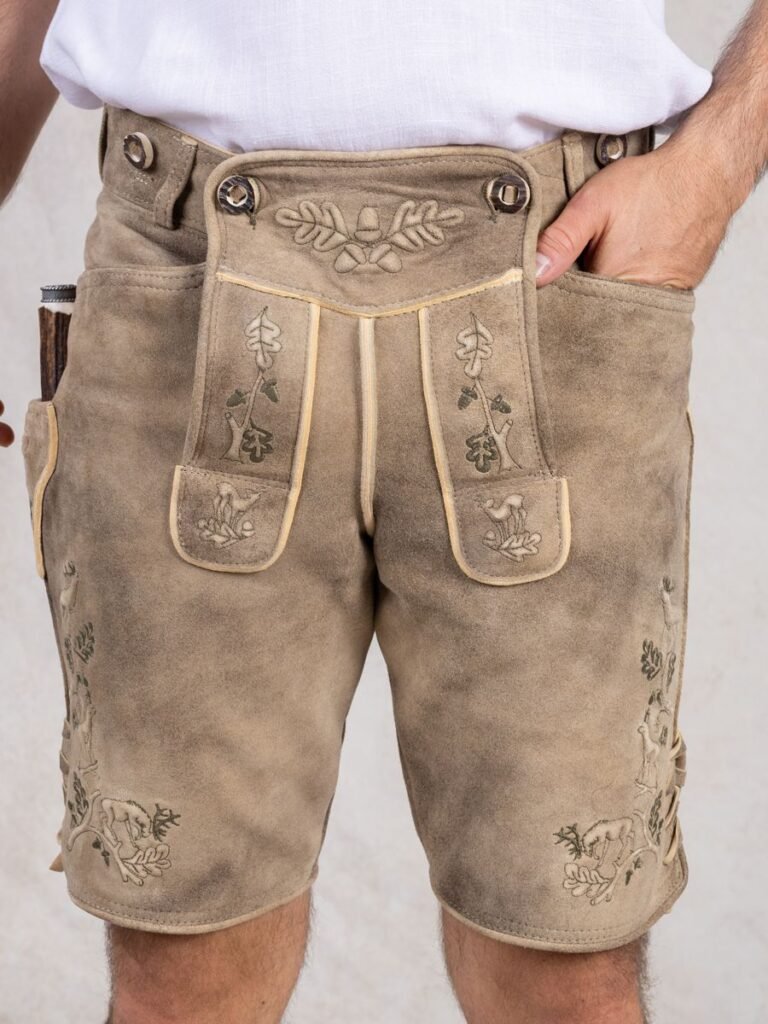

Authentic Lederhosen Men with Oak Embroidered
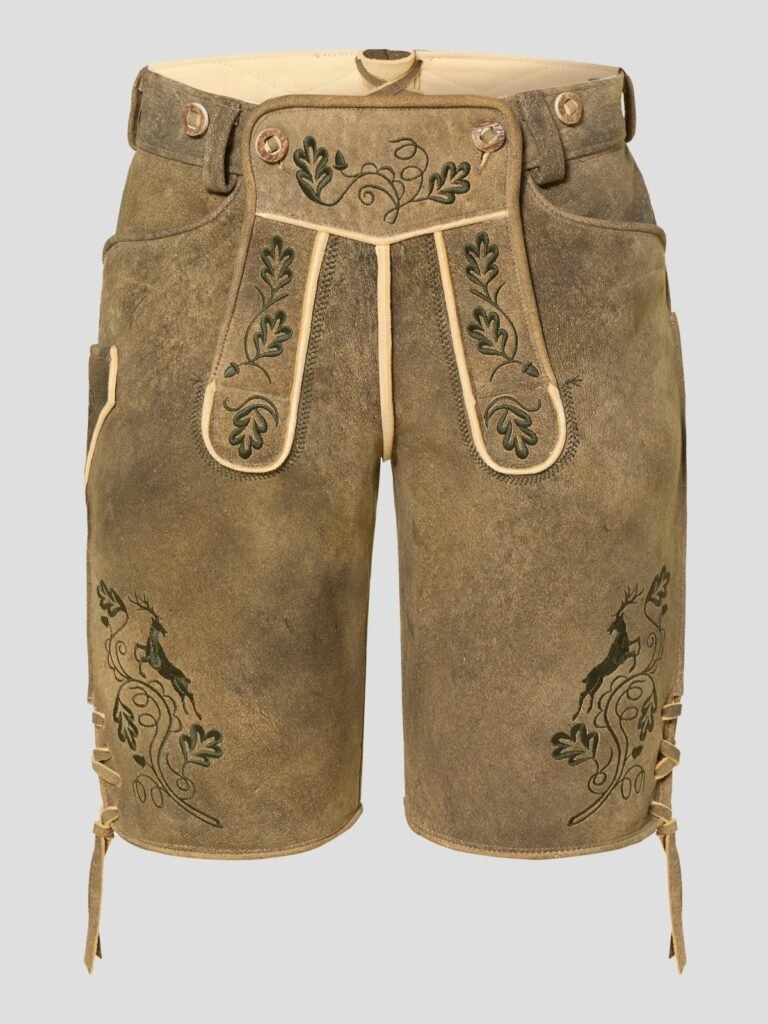
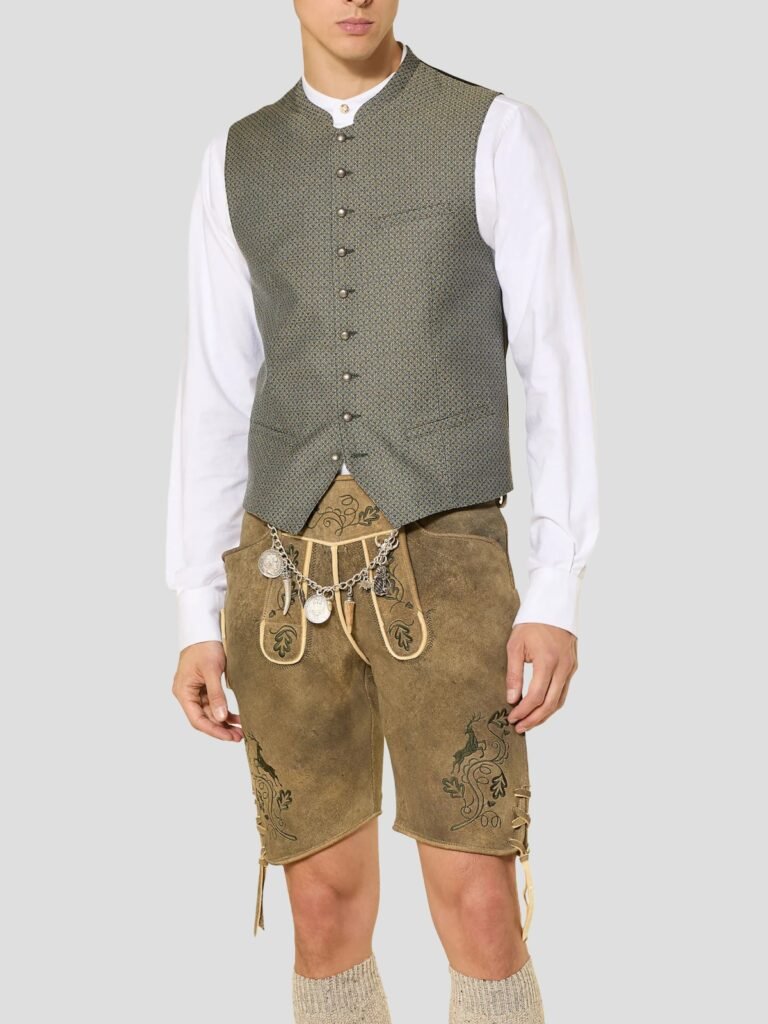
Frontier Deerskin Lederhosen in Coyote Brown
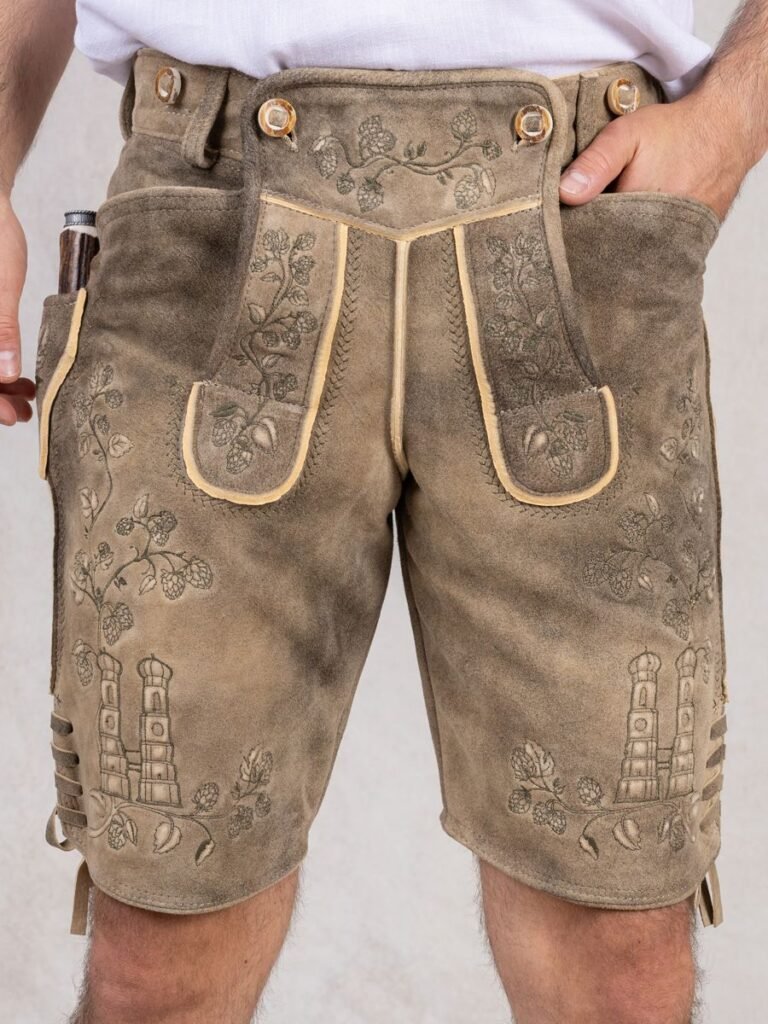
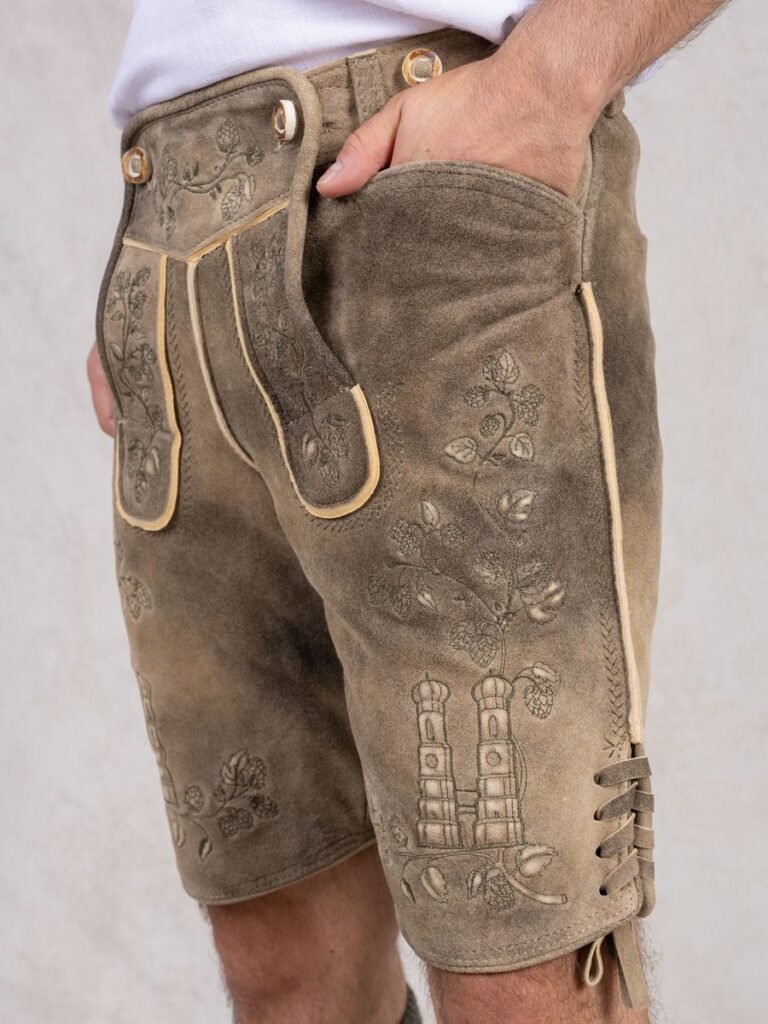
Premium Traditional Lederhosen Shorts – Antique Brown with Munich Landmark Design
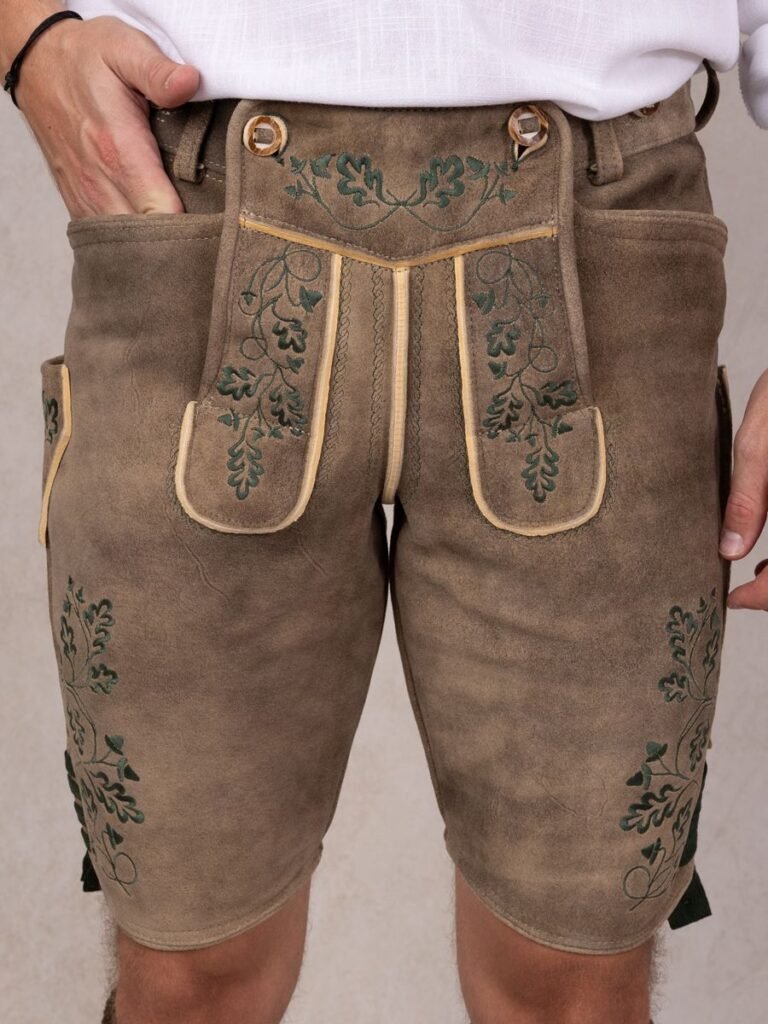

Rustic Trachten Lederhosen with Green Traditional Embroidery
What Are Deerskin Lederhosen and Are They Worth It?
Deerskin lederhosen are Bavarian leather trousers cut from the hide of the European red deer and finished through chamois tanning, and they earn their higher price for buyers who want leather that sheds water, softens quickly and can last 30–50 years with proper care.
That price gap is the first thing people notice, so it helps to work backwards from it. Deerskin started as gear for Alpine hunters and gamekeepers, who needed trousers that survived wet slopes long before anyone wore them as an Oktoberfest costume. The premium tag today is a leftover of that working past, not a fashion markup.
On the shop floor, the deerskin customer is rarely a beginner. Most already own goat suede or cowhide lederhosen and are building serious Trachten wardrobes, which is why deerskin is best seen as a heritage investment rather than a first purchase.
The cuts run from short men’s lederhosen to knee lengths, and the better ones are handmade. That combination is why a good pair works as a symbol of Bavarian tradition and as an heirloom you can actually hand down.
Why Do Lederhosen Buyers Pick Deerskin Over Other Leathers?
Buyers pick deerskin lederhosen because the leather is naturally water-repellent, feels soft from the first wear, and returns to shape after stretching, which goat and cow leathers do more slowly.
The water side comes from tanning chemistry rather than sprays. Chamois tanning leaves oils inside the fibres, so deerskin gets its water resistance without a coating. You see it the moment a drink spills on a pair at a beer tent and runs straight off.
The comfort side is about the hide itself. Deerskin weighs less than cow suede, so the break-in period is short, and the silky texture sits against the leg without the board-like feel of a new cowhide pair. A natural grain with a fine, irregular grain pattern means no two deerskin panels look alike.
Here is where I push back on the usual sales copy: stretch changes how you size. Don’t automatically size up. If you fall between two sizes, pick the smaller one, because deerskin gives with wear and settles to your shape. I still put accurate sizing first: measure carefully with our lederhosen size chart before you order, because a comfortable pair depends on it.
Where Did Hirschleder Lederhosen Come From?
Hirschleder lederhosen came from the hunting cultures of Bavaria and Austria, where the hide of the Rothirsch, the local red deer, was turned into durable hunting breeches long before it became a costume.
The tanning behind them is far older than the trousers. The chamois method is traced back to 6000 before Christ, and it is a fully natural process built on animal oil rather than mineral salts. Deerskin was never invented as a luxury; it was simply the leather that survived mountain weather.
The shift to prestige came once Bavarian costumes became something people wore to show where they belonged. Red deer hide moved from the woods into church and festive occasions, and hunting scenes were stitched onto the leather as a nod to where the hide came from.
The better hides still come from wild forests rather than farms. That sourcing keeps deerskin prestigious and makes a high-quality pair closer to folk art than to ready-to-wear, which is exactly why it remains the default for formal Bavarian occasions.
How Is Real Hirschleder Made, From Hide to Leather?
Real Hirschleder is made by taking wild red deer hides through a slow, oil-based tanning process, then shaving, cutting and stitching the leather largely by hand.
It starts with selection. Red deer hides are less plentiful than goat or cow, and the grading is more demanding because every mark shows on a light leather. That scarcity is why deerskin is rarer on shop racks, not only pricier.
The tanning is the step that turns raw hide into chamois-tanned leather. Instead of fixing the fibres with chrome, the tanner works oil into the hide again and again, and the tanning oils stay inside as protective oils that are retained for the life of the trousers. That is where the water beading people notice years later comes from.
After tanning comes hand production: the leather is shaved to an even thickness, cut, and joined with sewing that is often done by one craftsperson per pair. Every pair ends up unique. In my experience, durability is decided at this stage, because a rushed tan shows up years later as stiffness.
How Does Deerskin Compare With Goatskin and Cowhide Lederhosen?
Deerskin lederhosen are thinner and lighter than goatskin or cowhide pairs, shed water better, and sit at the top of the price ladder.
Numbers help more than adjectives here. Premium deerskin has a workshop thickness of 1.0–1.3mm, against 1.2–1.4mm for goat suede, so deerskin is the thinner leather even though it outlasts the others. The hand-feel differs just as clearly:
| Leather | Workshop gauge | Hand-feel | Traditional role |
| Hirschleder (deerskin) | 1.0–1.3mm | Silky and slightly waxy | Prestige material for formal Trachten and heirloom gifts |
| Goatskin suede | 1.2–1.4mm | Matte velvet | Everyday pairs and first pairs |
| Cowhide | 1.5–2.0mm | Firmer | Hard-wearing, rough-use pairs |
Thinner does not mean weaker. Deerskin’s oils make it the pair I’d pack for outdoor Alpine events where rain is likely. And despite the common claim that deerskin has the least stretch of the three, it gives noticeably and springs back, so I treat stretch as a reason to try a pair on before buying.
How Can You Tell If Deerskin Lederhosen Are the Real Thing?
You can tell real deerskin lederhosen from fakes by checking how the leather handles water, how it stretches, what marks it carries, and where the hide came from.
This matters because bargain listings sold as deerskin may use unverified or imported hide, so authenticity is worth five minutes of checking. There are four standard authentication tests; below are two of them plus two checks I add, in the order I run them at the counter:
- Water bead test: a drop on the leather should sit as water beads rather than darken the surface straight away.
- Pull test: real deerskin stretches under a firm pull and shows full recovery when released, and that elasticity is hard to fake.
- Surface marks: hides from wild Euro-deer may show small scars or tick bites, which are a sign of individuality rather than flaws.
- Origin question: ask whether the leather is from wild European herds or New Zealand deer from farmed herds, since farmed hides tend to give a uniform, off the shelf look.
If a seller cannot answer the fourth point, I treat the listing as cheap deerskin until proven otherwise. The remaining two tests, grain and smell, are covered in the FAQ below, and our guide to authentic vs fake lederhosen goes deeper.
What Features Come on a Pair of Deerskin Lederhosen?
A pair of deerskin lederhosen usually comes as leather shorts or knee breeches with decorative stitching, horn-type fastenings, pockets, and colours from vintage browns to deep blacks.
Style splits two ways. Embroidered pairs carry the traditional flap and leg decoration, while plain styles suit a casual outfit or a more refined, modern look. I usually steer first-time deerskin owners toward a plain pair, because the leather itself is the feature they paid for.
What makes deerskin top tier is less the decoration and more the traditional Bavarian construction underneath. A luxurious pair still reads as Trachten rather than fashion when it is worn with classic suspenders and proper Lederhosen shirts. The leather is also often finished for a rustic look, a deliberately quaint surface explained further down.
Sizes come in a wide range: we sell from US 30 up to US 52, including plus size lederhosen fits. Before you buy, check our size guide with measuring instructions.
Which Deerskin Lederhosen Cut Should You Choose?
The right deerskin lederhosen cut comes down to hem length (short, knee or full length) and to how hard you plan to use the pair.
Start with the short cut’s inseam, which is 25.4–30.4cm (10–12 inches) as standard. That short length is the one I’d choose for everyday wear in summer, since it leaves the knee free when you sit on a bench for hours. You can also consider knee-length bundhosen and full length lederhosen if you prefer more leg coverage, a traditional appearance, or added protection in cooler weather. The best option ultimately depends on your personal style, comfort, and the occasion.
Pockets matter more than people expect. A side pocket for a phone and knife pockets are common on deerskin pairs, and for rough use such as hiking I’d pick a cut that keeps both reachable while seated, which in practice favours the shorter styles.
How Should Deerskin Lederhosen Fit, and What Size Do You Need?
Deerskin lederhosen should fit snugly at first, because the leather moulds to your body within 1–2 wears and then holds that shape.
Hem position is the other half of fit, and each traditional cut sits differently on the leg:
| Cut | Where the hem sits | Fit note |
| Kurze (short) | Mid-thigh, above the knee | Most flexibility for walking and sitting |
| Bundhosen (knee-length) | Just below the knee, with a closure | The closure should sit firm without pinching the calf |
| Lange (long) | Full ankle length | Measure the whole leg, not just the waist |
Genuine deerskin stretches about 5–10 percent and springs back, which is what the stretch and recovery test checks, so a slightly tight waist on day one is normal rather than a sizing mistake.
If no chart fits, custom work is an option. You can send us your waist, hip and thigh measurements in the order notes when you check out.
How Do You Look After Deerskin Lederhosen Season to Season?
Looking after deerskin lederhosen mostly means leaving the leather alone and watching the seams, embroidery and hardware attached to it.
The leather is the easy part: a 20-year-old pair is worth more than a new one, because tanning oils rise to the surface over the years and build patina. So the goal is not to make the leather look new but to protect everything stitched onto it.
Check the reinforced stitching at the stress points at the end of every season. Look over the brocade embroidery on the bib and leg panels for lifted threads, since in my experience one snag spreads quickly once it catches.
Hardware needs a glance too. I wipe rustic brass buckles dry and check the threads holding deer horn buttons or horn-style buttons, which tend to loosen before the buttons themselves fail. A polyester-free inner lining breathes, so a pair can dry out on its own after wet-weather use, and that is the kind of proper care that costs nothing.
Why Do Deerskin Lederhosen Cost So Much?
Deerskin lederhosen cost more because the hide is harder to source and the traditional tanning takes weeks to months instead of a single day.
Time is the largest cost. Chrome tanning finishes in about one day, while traditional Sämischgerbung takes anywhere from several weeks to 6 to 9 months, with tanneries in Germany still following recipes handed down over generations.
Supply adds to it. Red deer hides are scarcer than goat or cow hides, so on a relative price basis deerskin sits at the top, goat suede in the mid-range, and cowhide from entry to mid-range. That is why deerskin is widely regarded as the most expensive and highest-quality leather on the market.
My contrarian take: a 100% genuine deerskin label alone does not justify the price. The tanning method does. Two pairs can both be real deerskin, and the one tanned in a day will not age the way an oil-tanned pair does, so ask which process was used before you pay.
When Are Deerskin Lederhosen the Right Choice?
Deerskin lederhosen are the right choice when you want one pair for decades of formal and festival wear rather than a budget pair for a single Oktoberfest.
That use case has deep roots. Lederhosen began as peasant work clothes, and in the 19th-century the Trachtenvereine movement, linked to King Ludwig II in the 1880s, made deerskin the leather of formal and Sunday Trachten while goat and cow covered daily wear. The hide itself had been hunting gear since the 18th-century.
The best use of deerskin is still the occasions history gave it. For first purchases, goat suede (with a 15–25 year lifespan) or cowhide (20–30 year) is the sensible start, and deerskin becomes the second pair, a common path for owners of goat suede lederhosen.
The exception is comfort. If you want immediate comfort and dislike breaking leather in, deerskin’s softness from the start can justify skipping the cheaper step entirely.
How Is Deerskin Dyed for Lederhosen?
Deerskin for lederhosen is dyed with plant-based dyes made from wood, applied after an oil tanning, and the shade is then deepened with hand finishing.
The dye takes well because of what came before. The hide was worked with fish oil, a method also known as fat tanning, and no fish smell survives into the finished leather.
Shades run from rich browns to sleek blacks. After the pair is stitched, the surface is sanded, waxed and polished in a step known as “using”, which lays an aged, smoky tone over the dye.
From what I’ve seen, a mid-brown is the most versatile pick: it works for a casual day out and still looks right at a wedding or a church festival, while the darkest shades suit evening events better.
What Makes Deerskin Lederhosen Look Old From Day One?
Deerskin lederhosen look old from day one because the surface is deliberately distressed and coloured with expensive plant dyes that read as weathered rather than bright.
The color starts with natural wood dyes, and they are costly: beech dye alone runs to several hundred euros per kilogram. That single input explains part of the gap between deerskin and cheaper leathers.
Decoration is chosen to match the finish. Classic motifs such as Edelweiss flowers are stitched in thread, while light-colored outer seams and side lacing trace the leg, and the contrast against a darkened hide gives the old-world look.
The finish also keeps changing with movement: creases form where you sit and bend, so stylish shorts that look stiff on the rack soften quickly. Add a leather belt, or suspenders on request, and the outfit looks lived-in from the first outing.
Deerskin Lederhosen FAQs
What Is Hirschleder?
Hirschleder is the German name for deerskin leather, the oil-tanned hide of the wild red deer used for the softest and most supple lederhosen. It sits above Ziegenleder (goat) and Rindsleder (cow) in the traditional hierarchy, and it is a close relative of buckskin leather. Its breathability suits long days of dancing, and a fine grain that holds up to a grain pattern test separates it from cheaper leather.
Why Is Hirschleder More Expensive Than Other Lederhosen Leather?
Hirschleder is more expensive because the hide and its slow tanning cost more, though spread over decades a pair can work out cheaper per year than a budget one. Traditionally tanned deerskin pairs are rarely sold online or in stores below 1000 €. Sellers who cut out middlemen and run a streamlined shipping process can keep prices competitive and offer premium quality at affordable prices, so compare tanning methods rather than lederhosen price tags alone. The more useful figure is cost per year of wear, which often makes deerskin a fair price in the end.
Are Deerskin Lederhosen Water-Repellent?
Yes, deerskin lederhosen are naturally water-repellent because chamois tanning leaves oils inside the leather. Water should bead on the surface for at least 60 seconds, which is also a quick way to verify a pair. The tough hide resists stains well enough for outdoor activities. If the pair gets soaked, blot it and let it air dry in a cool, dry place; that simple routine is a large part of why the leather lasts decades.
How Do I Check That My Deerskin Lederhosen Are Real?
You can check deerskin lederhosen at home with four tests: water beading, grain, stretch and smell. The smell test is the one most people skip, yet genuine chamois-tanned hide smells natural and slightly oily, never chemical. If anything seems off, call the seller or use their contact form and ask about the tanning method and hide origin before the return window closes.
How Long Do Deerskin Lederhosen Last?
Deerskin lederhosen last for decades, with a 30–50 year lifespan being typical, which is why the leather earned the trust of 18th-century hunters. After a short break-in time, the pair mostly needs conditioning once a year, ideally before festival season, and no extra treatment beyond that. Don’t try to restore newness, because the deepest patina only comes with age, and that long life is what makes ownership economical. Keep the seller’s leather care guide with the pair.
What Should You Avoid When Cleaning Deerskin Lederhosen?
Avoid machine washing, dry cleaning and harsh chemicals on deerskin lederhosen, because the leather relies on the oils left by its tanning. Instead, brush the pair with a soft natural-bristle brush after each wear and spot clean any marks. Condition it with a leather conditioner sparingly; the rule is to condition yearly. Store it on a wide wooden hanger or padded hanger inside a breathable cotton bag, never plastic. Treated this way, a pair is rated for 30–50 years, and with that care it truly lasts a lifetime. For a full routine, see our guide to cleaning lederhosen at home.