
Product categories
- Accessories
- Bundhosen
- Deerskin Lederhosen
- Dirndl
- Dirndl Purses
- Girls Dirndl
- Kids
- Kids Lederhosen
- Lederhosen
- Lederhosen Belts
- Lederhosen Men
- Lederhosen Sets
- Lederhosen Shoes
- Lederhosen Skirts
- Lederhosen Socks
- Lederhosen Suspenders
- Lederhosen Women
- Long Lederhosen
- Men
- Oktoberfest 2026 Sale
- Plus Size Dirndl
- Plus Size Lederhosen
- Trachten Jackets
- Trachten Shirts
- Trachten Vest
- Uncategorized
- Women
Filter by price
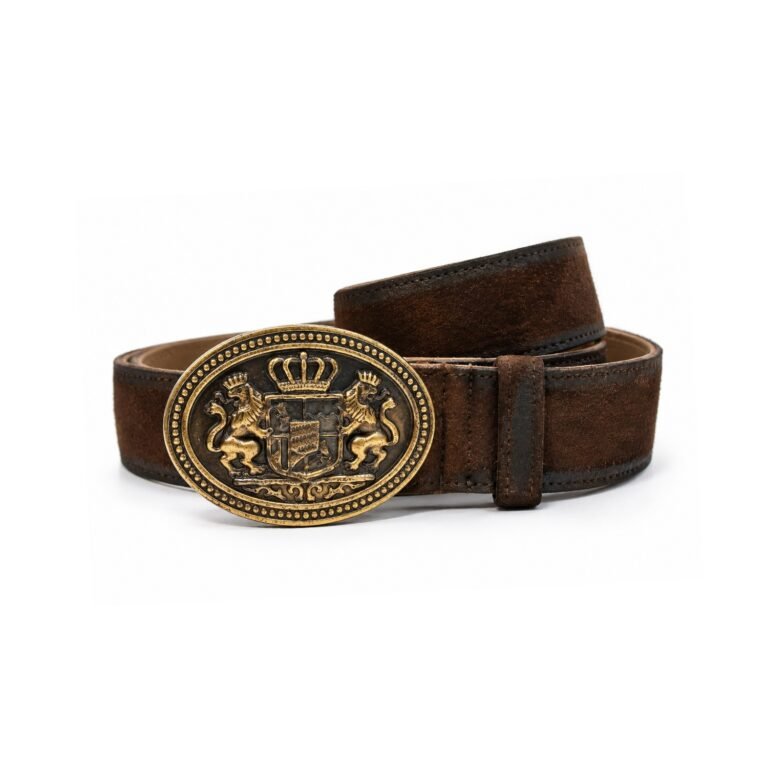
Chestnut Lion Crest Suede Lederhosen Belt
What Is a Lederhosen Belt and How Do You Choose the Right One?
A lederhosen belt is a leather waist belt with a decorative metal buckle that fastens over Bavarian lederhosen, either alone or together with suspenders. Choosing one comes down to four things: the leather, the buckle motif, the color and a size measured at the height where the belt sits.
Most shoppers start with the buckle, and that makes sense, because the front plate is what people notice first. Buckle motifs range from deer motifs and an eagle emblem to royal lions, and each one has a different character. A lion plate looks formal and heraldic, while a deer plate brings the Alpine countryside to mind.
Over a long festival day, though, the strap matters more. A traditional lederhosen belt is cut from cowhide, goatskin or deerskin. That choice decides how stiff the belt feels when it’s new and how soft it gets after a few seasons. Handmade straps sourced from whole hides keep small variations in the grain that machine-cut strips smooth away.
Most colors are shades of brown, because brown matches the leather shorts underneath. A good belt range covers all waist sizes, from slim builds up to plus fits, so nobody has to punch an extra hole at the kitchen table the night before Oktoberfest.
Which Leather Is Best for a Lederhosen Belt?
The right leather for a lederhosen belt is 100% genuine leather, thick enough to carry a metal buckle without curling at the edges.
That sounds obvious, but bonded and coated straps still turn up at festival stalls, and they tend to crack around the holes within a season. Real hide earns its place through durability. It stretches a little, then settles, and the holes stay round instead of tearing into slots.
The hide also shapes the color range. In my experience, goatskin takes lighter dyes well, so light brown and caramel brown belts are often goat. Cowhide holds deeper dark brown tones and has the robustness to carry a heavy plate. Deerskin is the softest and the premium choice if you want a belt that feels broken in early.
Check how the strap meets the frame, too. An oval, round or square buckle needs a strap that sits flush inside it. A heavy deer design plate on a thin strap tips forward until it hangs at an angle.
What Buckle Designs Do Lederhosen Belts Have?
Lederhosen belt buckles carry German motifs drawn from Bavarian culture: game animals, alpine flowers, heraldic beasts and folk scenes, cast into a metal alloy plate.
The best match for a buckle is usually already on your lederhosen. Embroidered motifs on the front flap often show oak leaves, deer or flowers. A buckle that repeats one of those themes ties the outfit together much better than a plate chosen at random. If you’re still choosing a pair, browse our authentic men’s lederhosen collection with the buckle in mind, since the flap embroidery is where the match starts.
The strap behind the plate changes the mood. A vintage brown strap with hand-stitched trim makes a lion or eagle plate look like an heirloom. Antique black leather turns the same plate into something closer to evening wear. Two-tone straps are the boldest pairing, and I’d save them for outfits with a plain shirt.
How the belt will be worn decides how big the plate should be. With suspenders on, part of the buckle is hidden, so a modest plate is enough. Without suspenders, the buckle becomes the focal point of the waist and can be bigger.
What Colors Do Lederhosen Belts Come In?
Lederhosen belts come mostly in browns, from light brown through caramel to dark brown, with black, grey and green as less common options.
Texture changes a color more than people expect. Tan suede looks almost sandy in daylight and darker under beer-tent lights. Aged brown suede has a dusty, lived-in surface that hides scuffs from the first evening. Smooth leather in the same dye looks shinier and newer.
Thread adds a second color. Contrast stitching in pale contrast polyester thread outlines the strap and makes a plain brown belt look finished. The same light line frames darker metal and gives an antique buckle its classic beauty. Some belts go further, with beading around the plate or an edelweiss stamp near the tip.
When completing the look, match the belt to your Oktoberfest vests first and your leather shorts second. A belt worn with or without suspenders sits just under the vest hem, so the two colors are always seen side by side.
What Size Lederhosen Belt Do I Need?
The lederhosen belt size you need depends on your waist measurement at the exact height where the belt will sit, not on your trouser size.
Lederhosen sit higher than jeans, so a belt in your jeans size often comes up short. I found that out at my first Oktoberfest, when my leather belt was on its last hole by noon. Find your number in three steps:
- Wrap a soft tape around your waist where the belt will sit, over the lederhosen waistband if you’ll wear the belt over them.
- Snug but not tight is the tension to aim for: one finger should slide under the tape.
- Measure a belt you already own, from the buckle to its most-used hole, or to the middle hole if you move between holes.
Go with the larger of the two readings. A well-sized belt puts your number near the middle hole, so there’s room either way after a big lunch.
Weight affects comfort as well. A belt with a cast stag emblem or a chunky statement buckle can weigh as much as 1 kg. That much metal pulls a loose belt down at the front, so heavier plates need a closer fit.
How Do You Measure for a Lederhosen Belt?
To measure for a lederhosen belt, take your tape reading and find the size band it falls in. Each letter size covers four inches of belt length.
| Size and range (inches) | If your reading is the top number |
| S 28-32 | Size up to M |
| M 32-36 | Size up to L |
| L 36-40 | Size up to XL |
| XL 40-44 | Size up to XXL |
| XXL 44-48 | Size up to XXXL |
| XXXL 48-52 | Largest standard band; ask about a longer strap |
A reading right on a boundary is a reason to size up. Lederhosen waistbands are thick leather, and a belt that only closes on its tightest hole leaves no room for a heavier shirt or an extra layer on a cold evening.
Metric belts are sized differently. They run from 90 to 120 cm in 5 cm steps, so a reading of 97 cm points to the 100 cm belt. To convert, multiply inches by 2.54: a 36-inch waist works out to about 91 cm.
If a belt is labeled only Small, Medium or Large, ask for the actual distance from the classic metal buckle to each hole before you order. Those labels can mean different lengths from one belt to the next.
Can You Wear a Lederhosen Belt With Suspenders?
Yes, you can wear a lederhosen belt with suspenders. Wearing both together is a traditional option, and the belt goes from doing the work to finishing the outfit.
Without suspenders, the belt is the only thing holding up heavy leather shorts. With suspenders attached, it moves from the functional accessories column to the decorative touches column. It still keeps the waist neat, but the shoulder straps carry the weight. That means a belt worn under suspenders can sit a little looser and still give a comfortable fit through hours on a beer bench. If your pair has suspender buttons, shop suspenders for lederhosen in the same leather tone as the belt so the two read as one set.
What people see changes too. The suspender crossbar covers the chest, so the eye drops straight to the waist, where engraved metal buckles catch the light. A swamp deer plate on authentic leather straps works well here, because its outline stays easy to read even with the suspender ends hanging close by.
Keep the rest of the outfit simple: traditional shirts in white or check, loferl on the calves, and leather shoes in the same brown or vintage black as the belt. When you shop german men’s shoes, hold the belt next to them so the two leather tones line up.
What Do You Wear With a Lederhosen Belt?
A lederhosen belt goes with the rest of Bavarian traditional dress: lederhosen or a skirt, a shirt, a waistcoat and often suspenders. The belt’s color is chosen to tie those pieces together. Socks belong in that palette too, so shop mens lederhosen socks in a shade that echoes the strap rather than the shirt.
Trachten belts aren’t only for men. Women wear them over dirndls or leather skirts, cinched at the natural waist. A slimmer strap with floral scenes on the buckle suits that silhouette better than a wide men’s plate.
For men, the Bavarian waistcoat decides the belt color, because its hem sits just above the buckle. These pairings have worked for me:
- Mocha belts with charcoal or brown wool waistcoats.
- Rustic grey belts with grey-green loden and pewter buttons.
- Deep green belts with green-trimmed lederhosen and matching Bavarian suspenders.
Whatever you combine, keep the metals consistent across your German trachten clothing. White-metal vest buttons next to a gold-toned buckle is the one clash that makes festival attire look like it came out of three different boxes.
How Do You Care for a Leather Lederhosen Belt?
To care for a lederhosen belt, look after two materials: brush and condition the strap, and keep the buckle hardware dry so corrosion can’t start.
Caring for real leather is mostly about what not to do. Never soak the strap or dry it on a radiator. Let it air-dry at room temperature, then work in a thin layer of conditioner once or twice a season. Napped hides and different buckle finishes each need their own routine:
| Material or finish | Care routine |
| Nubuck leather | Dry-brush only; lift marks with a nubuck eraser |
| Suede and goat suede leather | Brush the nap in one direction; skip creams, which flatten it |
| Black smooth leather | A tinted cream conditioner covers scuffed edges |
| Brass buckles | Wipe dry; polish now and then, or let the patina build |
| Silver buckles | Soft cloth after each wear to slow tarnish |
| Antique bronze finish | Wipe only; polish strips the darkened finish |
The metal clasp is where neglect shows first. Spilled beer and sweat collect in the hinge of a royal emblem clasp, and the steel tongue and pin are where corrosion begins. Wipe them after every wear, and prevent rust by storing the belt flat in a dry drawer, not coiled in a damp bag.
Condition the leather behind the buckle too. That fold bends every time you fasten the belt, and it’s usually the first place a strap cracks.
Lederhosen Belt FAQs
Can You Wear a Regular Belt With Lederhosen?
You can wear a regular belt with lederhosen, but a plain office belt looks out of place next to the embroidery and horn buttons. A lederhosen belt has a wider strap and a decorative buckle with an Alpine motif, made to match the leather shorts. If a regular belt is all you have, go for thick brown leather with a simple metal buckle, and wear suspenders over it so the buckle draws less attention.
Is a Lederhosen Belt the Same as a Trachten Belt?
Yes. A lederhosen belt and a trachten belt are usually the same thing, because “trachten” is the German word for traditional Bavarian dress. People say “trachten belt” when they mean the wider family of traditional belts, which women also wear over dirndls and leather skirts. “Lederhosen belt” is the name men usually search for when they’re buying one to go with their shorts.
Do All Lederhosen Have Belt Loops?
No, not all lederhosen have belt loops. Many pairs do, but some traditional cuts are designed to be held up by suspenders and laced at the sides. Before you order a belt, look at the waistband: if it has loops, measure where they sit, because that height is where the belt will sit too. Pairs without loops look best with suspenders, or with a belt worn lower on the hips as decoration only.