
How to Wash a Dirndl Without Ruining It: Dress, Blouse & Apron Care

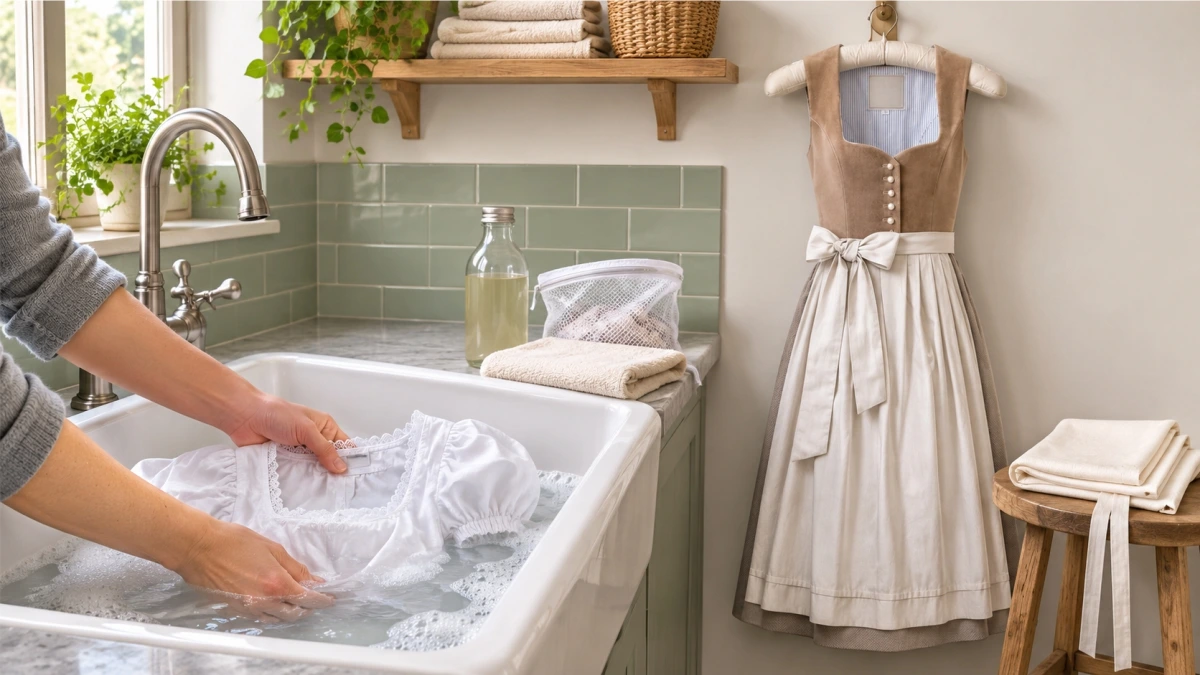
How to Wash a Dirndl
To wash a dirndl, check the care label, separate the dress, blouse and apron, then wash each piece inside out on a delicate cycle at no more than 30°C (86°F) with mild detergent and let it air-dry on a hanger.
A dirndl is several garments sharing one outfit, and each part is cut from different materials. The tag stitched inside the dress, called the Pflegeetikett on German-made pieces, outranks every general rule, including the ones on this page. It decides whether a piece belongs in the washing machine, needs hand washing, or should leave the house entirely.
Most post-festival damage is small and specific: a smear of schnitzel grease on a cuff, a streak of mustard near the hem, spilled beer down the front, and a cloud of smoke and perfume trapped in the lining. Treating each mark by where it sits, not by how bad it looks, is what keeps a dress wearable for years.
Before anything gets wet, unclip the satin ribbons, hooks and chains. Set the bloomers and petticoats aside too, because the layers worn underneath follow their own rules.
What Does the Care Label on a Dirndl Tell You?
The care label on a dirndl tells you the safest wash method, the hottest water the fabric can take, and whether it can be bleached or machine dried, so it should be read before the dress touches water.
On a traditional dress, those symbols vary more than most people expect. A silk apron may carry a 29°C limit while a linen dress tolerates 40°C, and going past either figure invites shrinkage. One tag might ask for a laundry bag and a low spin speed, while another marks the trims for spot clean treatment only.
Mixed fabrics are where most mistakes happen. Blends of cotton and polyester shrug off a gentle machine run, but velvet and heavily decorated panels rarely do. A solid white cotton blouse is the unusual piece whose tag may permit a little bleach.
When a label has faded or been cut out, treat the garment as the most fragile fabric it could contain. In my years of fitting dirndls, the pieces that come back ruined almost always lost their tag first. If you are unsure what a fabric is, hand it to a professional cleaner instead of guessing.
Should You Hand Wash or Machine Wash a Dirndl?
Hand wash a dirndl unless its label clearly marks it as machine washable; a plain 100% cotton dress, sold in Germany as a Waschdirndl, is the main style built to handle a drum.
Care advice genuinely splits on this point. One camp says hand washing always wins because tumbling and heat stress fine fabric; the other says a cotton dirndl leaves a gentle cycle unharmed. Both are right, and which applies depends on the fabric, not on preference. A tag reading hand wash only settles it, because the manufacturer knows what sits inside the seams.
If the machine is allowed, the prerequisites are short: empty pockets, a detergent free of bleach, a pre-wash treatment on visible marks, and any lace sealed in a delicates bag so it cannot catch on zippers. If your washer has a central agitator, bag everything so the apron ties cannot wrap around it.
Hand washing takes longer, but it happens step-by-step under your eyes, with gentle swishing instead of rubbing. A blouse is a small garment and usually skips this whole debate; the dress itself is where caution pays off.
What Temperature Should You Wash a Dirndl At?
Wash a dirndl at 30°C (86°F) or cooler unless the label says otherwise, because hotter water fades dye and loosens the close fit of the bodice.
Heat alone is rarely the culprit; the problem is heat combined with the intense movements of a full cycle. High temperatures relax fibres, the drum then pulls them, and a fitted dress comes out a little longer and looser. Keeping the water at 30°C with a low spin protects the vibrant colors that make a dirndl worth wearing.
Different fabrics accept different ceilings, and the common ones compare like this:
| Fabric | Wash method | Temperature ceiling | Drying |
| 100% cotton dress | Machine on a delicate or hand-wash cycle | 30°C (86°F) | Air-dry on a hanger |
| Cotton-poly blouse | Machine on a gentle cycle | 30°C (86°F) | Dryer or line dry |
| Linen | Hand wash, or machine if labelled | 40°C (104°F) | Air-dry |
| Silk | Hand wash or professional cleaning | 29°C (84°F) | Air-dry |
| Lace blouse | Hand wash or gentle cycle in a bag | Cool water | Line dry only |
Turning the dial down costs nothing on a festival dress, because the dirt is surface grime rather than years of buildup. Pick the gentlest wash setting your machine offers and add more heat only when a label explicitly allows it. A white blouse can join a white load at that same 30°C, and the iron needs no more than a low to medium setting.
How Do You Wash a Dirndl Blouse?
Wash a dirndl blouse according to its fabric: cotton-poly blouses can go in the machine at 30°C, while lace and sequined blouses need hand washing or a gentle cycle inside a bag.
The blouse sits closest to the skin, so it collects sweat and spills first. Check the small tag at the side seam for its fabric composition; most blouses are cotton and polyester mixes, which makes them the easiest part of the outfit to clean and a forgiving counterpart to a fussier dress. A crisp white blouse also carries more of a dirndl’s beauty than people credit.
The three common blouse types need different handling:
| Blouse type | Wash method | Drying | Bleach |
| Cotton-poly, including off-the-shoulder | Machine on a normal cycle | Dryer safe | Not needed |
| Solid white cotton | Gentle cycle or hand wash | Line dry | A small amount is fine |
| Lace or sparkle | Hand wash, or gentle cycle in a delicates bag | Line dry only | Never |
Underarm marks are the blouse’s real enemy. Soaking them in warm water with baking soda before washing works on sturdy cotton, yet baking soda can harm fine fibres, so test it on a hidden area first. On a fresh spill, dab with a paper towel rather than wiping.
Wash blouses separately from the dress. When pressing lace or delicate trims, keep the iron on low heat under a press cloth.
How Do You Clean a Dirndl Apron?
Clean a dirndl apron by its fabric: plain cotton aprons can go through a gentle machine cycle on their own, while sheer, sequined or decorated aprons need spot cleaning or a professional.
The apron hangs right where sauerkraut and sweet mustard land, so it absorbs more of the evening than the dress behind it. Always wash it apart from the dress and the lacing. Apron dyes migrate easily, and discoloration on a pale bodice rarely comes out.
Spills on an apron go best when caught early. Blot fresh stains with lukewarm water, then work in a little stain remover before the full wash. For set red wine or fruit juice, rest just the marked panel in equal parts water and vinegar for a few hours, then launder as usual.
Aprons with appliqués or sequins belong in a bag to cut friction. Satin should never meet a hot iron directly, since irons leave shiny marks, while a handheld steamer or a clean dish towel between iron and fabric does not. When an apron is beaded or its tag is unclear, a dry cleaner costs less than a replacement and will extend its life by seasons.
How Do You Get Beer, Mustard and Grease Stains Out of a Dirndl?
Get stains out of a dirndl by blotting them immediately, pre-treating with a tested stain remover, and then giving the piece a long hand wash rather than scrubbing it in a machine.
Stains from the festival season fall into two groups. Beer, gravy and schnapps are water-based and lift with cold water and a damp cloth if you catch them that night; the apron, as the dirtiest part of any outfit, usually needs this first. Sausage fat and pit stains on blouses are greasier, and the stubborn ones need the slow method.
Never iron over a mark. Heat locks pigment into fibres, and a stain that persists after ironing is usually permanent. For stubborn marks, a long hand wash does more than any cycle:
- Sink: Detach the apron, then fill a sink with warm water and a little delicate detergent.
- Soak: Lay the dirndl in and soak it for at least two hours, swishing it now and then.
- Rinse: Rinse with clean warm water until no suds remain.
- Hang: Lift it straight onto a hanger and hang it to air-dry.
Two hours sounds excessive, but the soak does the work that scrubbing would otherwise do, without loosening a single hook. If a mark survives all of this, the next step is a professional rather than a second, harsher round at home.
How Should You Dry a Dirndl After Washing?
Dry a dirndl by hanging it on a padded hanger in an airy room out of direct sun, and never put it in a tumble dryer.
Lift the dress out of the machine or basin promptly, because colors can shift when wet fabric sits too long. Drying outdoors in fresh air also clears lingering odors, and it is far gentler than heat. A heavy cotton dress may need a full day to dry completely.
The sun splits opinion. Sunshine brightens a white cotton blouse and chases smells, yet it fades colored fabric. A reliable drying routine looks like this:
- Lift promptly: Take the dirndl out as soon as the wash ends so damp dye cannot travel.
- Skip wringing: Roll it in a towel instead, because twisting distorts the silhouette.
- Hang straight: Use a padded hanger and close the bodice so its shape sets correctly.
- Pick the spot: Choose a room with moving air and no direct sun, and line dry blouses beside it.
Hanging it straight away lets gravity drop most wrinkles, and a quick burst of steam finishes the rest. A dress dried this way looks much closer to its first day than one left in a heap on a chair.
How Do You Iron or Steam a Dirndl Without Damage?
Iron a dirndl inside out on low heat with a press cloth between the iron and the fabric, and switch to a handheld steamer for lace, sequins and trim.
Work in order of fragility. Press the plain body first, then the flares of the skirt, and the bodice last, moving around buttons and bead embroidery rather than over them. A satin ribbon shines when it meets direct heat, and that gloss does not come out.
Hand-sewn trims and other embellishments are where most ironing damage happens. Steam lifts creases from them without pressure, and a steamer can also fluff a flattened petticoat in seconds.
If ironing at home feels risky, many cleaners include pressing in their fee. That fee typically runs €15 to €30 per dirndl, depending on the fabric and how dirty it is.
When Should a Dirndl Go to a Professional Cleaner?
A dirndl should go to a professional cleaner when its label says dry clean only, when it is silk or heavily trimmed, or when a stain has survived a careful home wash.
Trim and hardware are the usual reasons. A dress with bodice hooks, bodice chains, beaded lace or appliqués rarely survives a drum, and old stains from oil or coffee respond better to a cleaner’s solvents than to a third home attempt. Pull ribbons and chains from the pockets before drop-off, since small parts go missing at the counter.
Pressing a dirndl properly is a skill, and cleaners practice it daily. A dress cleaned professionally once a season keeps its quality far longer than one rescued at home three times. Ask for the price upfront to avoid nasty surprises.
How Do You Get Beer and Smoke Smell Out of a Dirndl?
Get beer and smoke smell out of a dirndl by hanging it in open air for a whole day before washing; most of the smell lifts without any water touching the fabric.
After a night at the Wiesn, a dress can smell like a stale brewery floor, with roast chicken and tobacco woven into the lining. Pick a well-ventilated, shaded spot such as a covered balcony. A plain apron can sit in the sun for a few hours to lose its smell, but colored panels fade there.
A delicate garment benefits most from airing, because every skipped wash is one less round of stress on the fabric. Do not push a smoky dress straight into the closet, either. Trapped smell will spread to everything hanging beside it.
How Do You Wash Dirndl Bloomers and Petticoats?
Wash dirndl bloomers in the machine and tumble dry them, but hand wash petticoats and hang them to dry so the net keeps its volume.
Bloomers are the plainest layer of the outfit and handle a normal cycle without complaint. A petticoat is different. Its stiff net holds the skirt out, and heat collapses it, so it should never see a dryer.
If a petticoat does go in the machine, zip it into a mesh bag so the net cannot snag on hooks or zippers. Follow the instructions on each tag, as underlayers come from many makers. Treated this way, both pieces last into the next season and well beyond it.
FAQs
Can You Put a Dirndl in the Washing Machine?
Yes, a dirndl can go in the washing machine when it is 100% cotton or its label explicitly allows it, while silk, linen and trimmed dresses should be hand washed or cleaned professionally. The label is the final answer whenever it disagrees with general advice. For anything doubtful, call ahead to a local cleaning provider and ask what they charge for your fabric and level of soiling.
What Happens If You Wash a Dirndl Too Hot?
Washing a dirndl too hot fades its colors, can shrink natural fibres, and loosens the fitted shape of the bodice. Keep to a maximum of 30°C on a delicate cycle with low spin. Linen tolerates up to 40°C, but silk should stay at 29°C. Extra heat adds no cleaning power on festival grime.
How Do You Remove a Stubborn Dirndl Stain at Home?
Remove a stubborn dirndl stain by applying a stain remover tested first on an inconspicuous spot, then hand washing the piece in lukewarm water with delicate detergent. Blot the mark with a microfibre cloth before treating it so the stain does not grow. If nothing shifts it, cleaners have techniques and solvents that home kits lack.
Can a Dirndl Go in the Tumble Dryer?
No, a dirndl should never go in the tumble dryer, because heat can warp the fabric, shrink it, and damage any support layer between the outer fabric and lining. Instead, gently press out the water, lay the dress on a dry towel, reshape the bodice and seams by hand, then hang it. Make sure it is fully dry before putting it away, since a damp dress stored too soon invites mold.