
Product categories
- Accessories
- Bundhosen
- Deerskin Lederhosen
- Dirndl
- Dirndl Purses
- Girls Dirndl
- Kids
- Kids Lederhosen
- Lederhosen Belts
- Lederhosen Men
- Lederhosen Sets
- Lederhosen Shoes
- Lederhosen Skirts
- Lederhosen Socks
- Lederhosen Suspenders
- Lederhosen Women
- Long Lederhosen
- Men's Oktoberfest Outfits
- Oktoberfest 2026 Sale
- Plus Size Dirndl
- Plus Size Lederhosen
- Trachten Jackets
- Trachten Shirts
- Trachten Vest
- Uncategorized
- Women's Oktoberfest Clothing
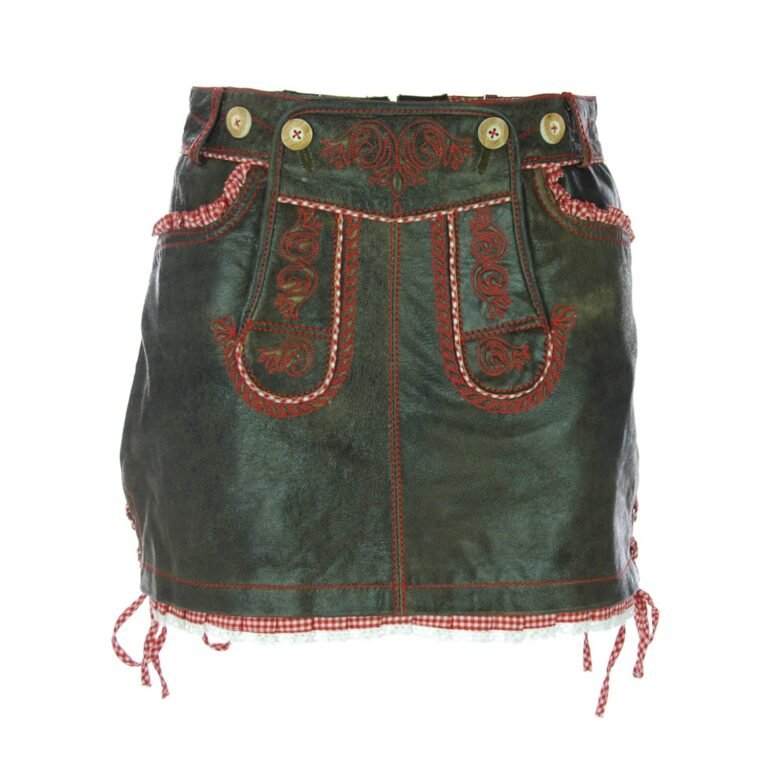
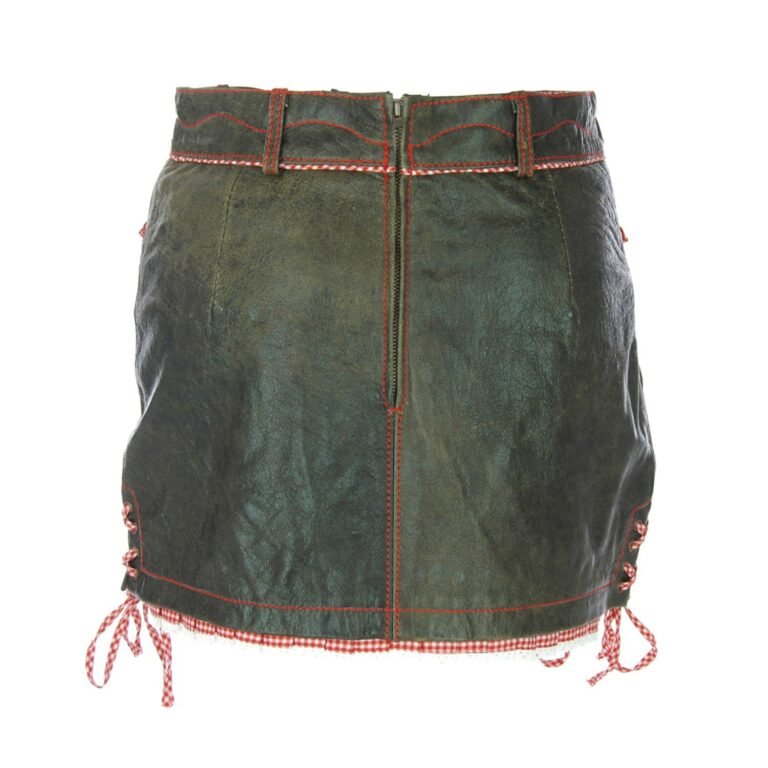
Women’s Forest Moss Lederhosen Skirt
Lederhosen Skirts: What Are They and How Do You Choose One?
A lederhosen skirt is a women’s skirt cut from real leather, usually goat or cow suede, that carries the embroidery, buttons and earthy colors of Bavarian lederhosen and is worn with a blouse at Oktoberfest, folk festivals and on ordinary days out.
The skirt exists because of the trousers. For centuries, leather pants in Bavaria and the Alps came in two shapes, cheeky short breeches for summer work and graceful long lederhosens for cold weather and church, and both were cut for men. The skirt keeps the hide, stitching and decoration of those traditional counterparts and reshapes them into traditional garments for ladies.
In German the piece is called a Lederrock, and it now sits comfortably inside German tracht next to the dirndl. Over the last few festival seasons I’ve watched more customers ask for a skirt-based outfit instead of a full dress, mostly because they want to dance, sit on benches and walk the grounds without fuss.
That demand is why leather skirts for ladies are no longer a niche corner of Oktoberfest women outfits. They turn up at traditional German celebrations worldwide, and they suit the modern woman who wants German tradition without a head-to-toe costume.
A well-made skirt balances tradition and modernity. The Bavarian-inspired design is steeped in history, yet the cut follows modern fashion, which explains the enduring appeal of a garment that began as a spin-off of Bavarian Lederhosen costumes. Wear one and you carry a piece of cultural history, with a cultural touch that never tips into fancy dress.
What Leather and Craftsmanship Go Into a Lederhosen Skirt?
A lederhosen skirt is cut from goat or cow leather and finished with the same stitching and embroidery as lederhosen, so the hide and the needlework decide how comfortable it feels and how long it lasts.
Start with the hide. Genuine leather in a suede finish is the standard, and goat is the hide I suggest for most buyers because it is thin, supple and light. Breathable suede leather lets air through on a warm afternoon, which matters when you wear it for eight hours in a packed tent. Cow leather is thicker and heavier, better for cool evenings and rough benches
High-quality suede leather has a soft, even nap and a natural texture with small variations, while perfectly uniform “suede” with a plastic feel is usually coated or fake. Those small irregularities give each skirt a unique character. Unlike woven traditional Bavarian skirts in wool or cotton, Lederhosen suede skirts hold their shape after a long day of sitting.
Construction comes next. Durable stitching in thick thread along the side seams and waistband is the first sign of quality craftsmanship, and modern tailoring with back darts gives a flattering fit over the hips. Top-notch quality materials inside, such as a cotton lining and solid buttons, add longevity.
Decoration finishes the job. Detailed embroidery moves the iconic elements of lederhosen onto the skirt, and embroidery styles run from tone-on-tone thread to a spectrum of colors. A thoughtfully designed skirt keeps that authentic design close to Alpine fashion instead of chasing seasonal trends, which is why the look never goes out of style.
What Lengths and Colors Do Lederhosen Skirts Come In?
Lederhosen skirts come in three main lengths (short, knee-length and midi) and in leather shades that run from tan and brown to black and olive.
The range follows the trousers. Short breech skirts echo short lederhosen, while longer cuts turn masculine silhouettes into feminine forms with a gentle A-line flare. Most collections offer various lengths plus a choice of sizes and colors, so the real decision is where you plan to wear it.
Here is how the three lengths compare in practice:
| Length | Where it ends | Look | Best for |
| Short | Mid-thigh | Playful short lengths with a contemporary casual look | Daytime festivals and hot weather |
| Knee-length | At or just above the knee | Simple and subtle, a flattering silhouette on most figures | Oktoberfest, church fairs, heritage photoshoots |
| Midi | Mid-calf | Sophistication and grace with modern elegance | Evening events and cultural performances |
Brown remains the classic choice because it hides beer splashes and darkens nicely with wear. Black reads as a more contemporary style and looks dressier after dark, while tan and olive give a fresh and elegant look in daylight.
Embroidery is the other variable. Some skirts are elaborate and colorful, with floral patterns, curling vines and Alpine motifs running down the front panel, while others keep intricate patterns to a narrow border. In my experience a busy skirt is easier styled casually with a plain top, and a quieter one can be dressed up with a lace blouse.
How Do You Wear a Lederhosen Skirt to Oktoberfest and Other Events?
You wear a lederhosen skirt by tucking a fitted blouse or shirt in at the waist, then choosing shoes and socks that match how formal the event is.
The top does most of the work. A traditional blouse with a lace neckline keeps the skirt firmly in festival territory, a checked Trachten shirt makes it look rustic, and a plain modern top pulls it toward everyday ethnic fashion. That styling flexibility is the main reason I point first-time buyers toward a skirt.
These are the three outfits I put together most often:
- Festival classic: a white lace blouse, wool socks to the knee and low leather lace-ups for Bavarian festivals, beer festivals and folk events.
- Daytime casual: a tucked tee, white sneakers and a denim jacket for a casual day out, a cultural fair or casual ethnic wear at the weekend.
- Street style: a black turtleneck, opaque tights and chunky boots for fashion-forward streetwear looks and themed parties.
Leather also handles long days well. Suede breathes better than polyester Oktoberfest costumes, so the skirt gives all-day comfort through extended wear at outdoor cultural celebrations, even when the afternoon heats up.
Beyond Oktoberfest, the same skirt fits traditional festivals, cultural parades, Bavarian-themed events and other themed events where a festive vibe is welcome. Wherever Bavarian culture sets the theme, a leather skirt looks at home rather than borrowed.
Is a Lederhosen Skirt a Good Alternative to a Dirndl?
Yes, a lederhosen skirt is a good alternative to a dirndl when you want more freedom to move and a simpler outfit, although the dirndl stays the safer pick for formal events.
A German Dirndl is a layered garment with a bodice, skirt and apron worn over a blouse. Trachten leather skirts replace that layering with one piece, which makes them a stylish alternative and a refined alternative rather than a costume. Both count as traditional Bavarian attire, so choosing leather doesn’t break any Bavarian dress codes.
Side by side, the two compare like this:
| Factor | Lederhosen skirt | Dirndl |
| Movement | Ease of movement for dancing and benches | Long skirt and apron limit your stride |
| Feel | Suede with a breathable texture | Cotton or polyester in several layers |
| Shoes and socks | Trachten shoes, ankle boots or knee-high socks | Ballet flats or pumps |
| Strongest occasion | Folk gatherings and outdoor fairs | Themed weddings and formal events |
| Re-wear | Works as an everyday outfit | Mostly saved for a festive occasion |
The skirt’s versatility is its strongest argument. It slips into a daily wardrobe with a sweater, which is hard to do with a dirndl, and it gives personal styling freedom without compromising style. You get a unique and stylish twist on tracht that still carries cultural authenticity.
My honest take is simple: if you attend one festival a year, buy the piece you’ll wear more. For many customers that’s the skirt, worn as a statement piece at Oktoberfest and with boots the rest of the year. If formal events fill your calendar, shop custom dirndl designs made to your measurements instead.
How Should a Lederhosen Skirt Fit?
A lederhosen skirt should sit snugly at the natural waist, skim the hips without pulling, and leave enough room to sit down and climb onto a bench.
Leather behaves differently from fabric. A suede skirt molds naturally to the body over time, so it should feel close but not tight on the first wear. Synthetic materials don’t relax the same way, which is why faux pieces often ride up or crease across the lap.
Measure your waist and hips before investing, and compare both numbers with the size chart rather than your usual dress size. Female Lederhosen skirts are cut for a woman’s waist-to-hip shape, and time-honored German tailoring techniques such as back darts and a contoured waistband create the modern silhouette. The same two numbers help when you buy womens lederhosen, if you prefer shorts to a skirt.
The hide changes the feel. Goat leather brings softness and a lightweight feel that suits most body types, while cow leather offers comfort and durability for heavier use. An A-line cut is an adaptable design, giving greater freedom of movement than a pencil shape and suiting both traditional and contemporary tastes.
Whatever your preferences, look for a leather skirt style that feels like a perfect match at the waist. Once it fits, you get modern comfort on day one and long-lasting comfort for seasons afterward. That fit is a big reason women’s trachten skirts have moved from festival wear into modern women’s fashion.
Is a Leather Lederhosen Skirt Worth the Money?
A leather lederhosen skirt is worth the money if you will wear it more than once, because real suede outlives a cheap festival costume by years and works outside Oktoberfest too.
Think in cost per wear. A polyester party skirt is often finished after one weekend, while real leather with strong stitching and reinforced seams keeps going for many years. That durability comes from the same construction used on classic German Lederhosen, and classic leather trousers in Bavaria are routinely handed down in families.
Check for high-quality finishes: clean edges, firmly attached buttons and embroidery with no loose threads. Those details make a skirt built to last, and long-lasting quality is the core of its long-lasting value. Because it doubles as everyday wear, it pays back its price faster than single-use German festival clothing.
Storage protects what you paid. Keep the skirt in a cool, dry place, away from direct sunlight to prevent fading, and hang it in a breathable garment cover that allows airflow instead of a plastic bag.
Treated this way, suede keeps its beauty and durability and its traditional charm. You end up owning timeless Bavarian fashion with real cultural roots in traditional Bavarian heritage, not a costume that borrows German heritage for one night.
How Do You Clean and Store a Suede Lederhosen Skirt?
You clean a suede lederhosen skirt by brushing and spot-treating it by hand rather than washing it, because water and detergent strip the oils that keep leather soft.
Genuine suede leather needs proper care more than frequent cleaning. Treated gently, goat suede and cowhide both age beautifully, picking up a soft sheen and rustic charm that new leather clothing can’t fake.
Follow this routine after each outing:
- Air it out. Hang the skirt overnight so beer and smoke smells can fade.
- Brush dried marks. Let mud dry completely, then lift it with a suede brush, working in one direction.
- Spot-treat spills. Dab fresh marks with a barely damp towel, and never put the skirt in the washer or a tub.
- Protect the embroidery. Brush around handcrafted details, because scrubbing across intricate traditional embroidery pulls threads and can distort heritage symbols.
- Hand off serious stains. Grease or red wine should go to a leather specialist.
Color changes how much upkeep a skirt needs. Pure leather shades like vintage browns and blacks hide wear best, and classic brown and black suede is what I recommend for low maintenance. Contemporary olive greens and yellows and other modern shades show marks sooner, so brush them after every wear.
Looked after like this, a skirt lasts for years and stays a working part of your Bavarian traditional wardrobe. Authentic Bavarian clothing, like other traditional German clothing in leather, is meant to be lived in rather than kept pristine.
What Should You Check Before Buying a Lederhosen Skirt?
Before buying a lederhosen skirt, check that the listing names the hide, gives real waist and hip measurements, shows close-ups of the stitching and embroidery, and explains how to care for the leather.
Start with material and design. A listing that just says “leather” without naming goat or cow is a warning sign. Close-up photos should show the embroidery clearly, since that’s where a skirt’s personal expression lives, and authentic German clothing shows even, dense stitching on the reverse as well as the front.
Next, look at fit features. Adjustable waist options, such as side lacing or a button tab, help if you fall between sizes or expect the leather to give a little after the first few wears.
Then read the care label. It should rule out machine washing and soaking in water, recommend a soft suede brush or a dry cloth for light dirt, and point to professional leather dry cleaning for deeper cleaning. If a seller calls a suede skirt washable, it probably isn’t real suede.
Finally, weigh the value. A good skirt is a versatile and contemporary alternative to the dirndl and a small vote for sustainable fashion, one piece instead of yearly fast-fashion replacements. Pieces from a premium collection become timeless wardrobe essentials, offer versatile styling for festivals and everyday wear, and strike a perfect balance between Bavarian heritage and authentic cultural style.
We pick the skirts at lederhosenstyles.com against these checks, so you can build a timeless Oktoberfest outfit, head to Munich beer festivals or your hometown fest, and celebrate Bavarian culture in a sophisticated way.
Lederhosen Skirts FAQs
What Is a Lederhosen Skirt Called in German?
In German, a lederhosen skirt is called a Lederrock, which simply means “leather skirt.” In the tracht world it often goes by Trachtenrock aus Leder or Trachten leather skirt, to separate it from woven skirts in wool or cotton. In English shops you’ll also see it listed as a Bavarian leather skirt or women’s lederhosen skirt, and all of these names point to the same suede piece with lederhosen-style embroidery.
Can You Wear a Lederhosen Skirt to Oktoberfest?
Yes, a lederhosen skirt is fully appropriate for Oktoberfest and is accepted as women’s tracht alongside the dirndl. Pair it with a white or checked blouse, knee socks and low leather shoes for a traditional look. A knee-length skirt reads most classic in the beer tent, while a short one suits hot daytime visits. To plan the whole look at once, shop german oktoberfest womens outfit ideas that pair the skirt with matching pieces.
Does a Suede Lederhosen Skirt Stretch Over Time?
Yes, a suede lederhosen skirt relaxes slightly with wear, mostly at the waistband and across the hips, but it does not grow a full size. Goat suede softens faster than cow leather, so a goat skirt that feels snug on the first day usually feels just right after a few wears. If a skirt is uncomfortably tight when you first try it, go up a size rather than waiting for the leather to give.